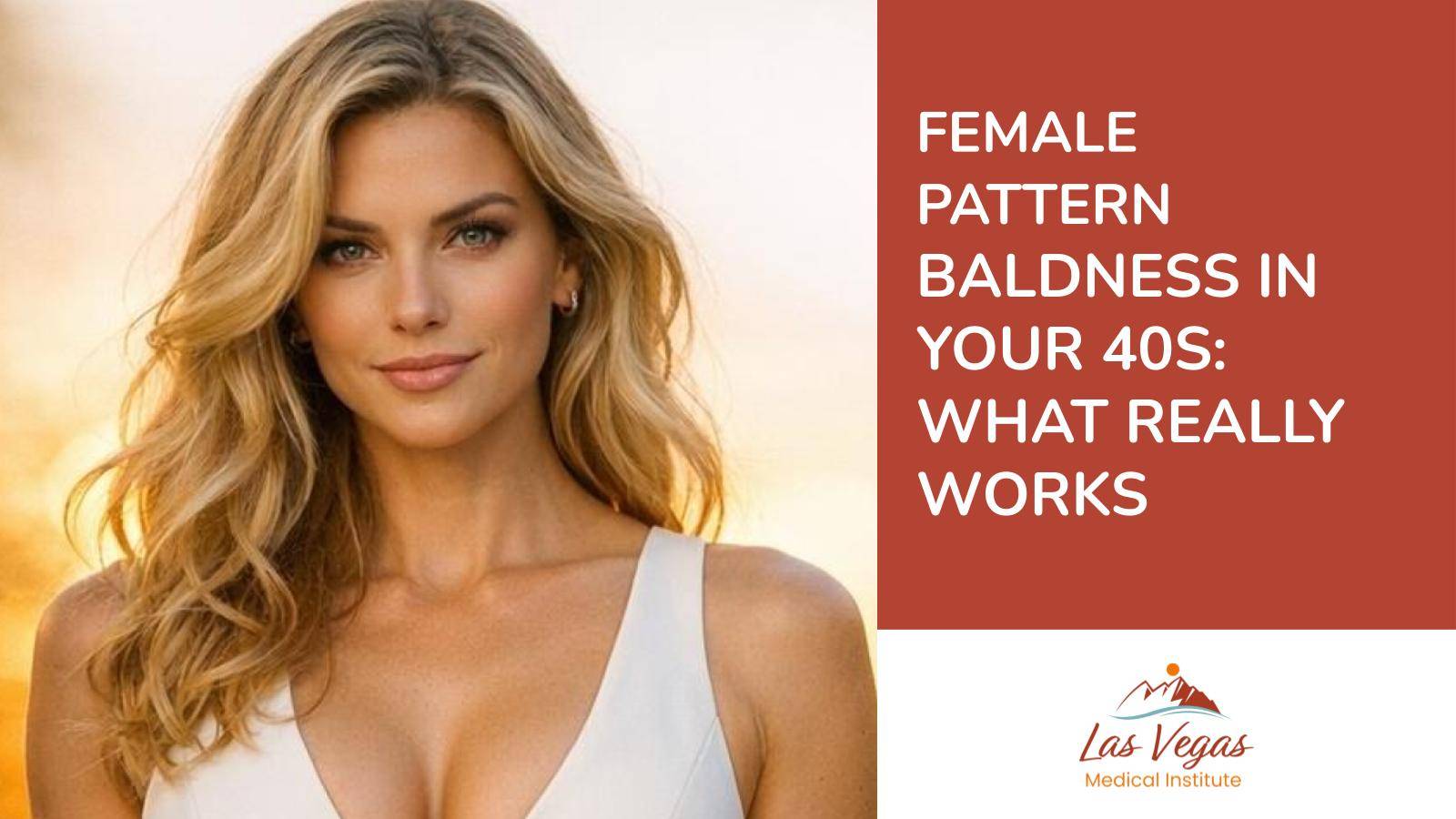
Female pattern baldness in 40s usually shows up as slowly widening parts and thinning hair at the crown, and it can be treated if caught early. It's a form of female pattern hair loss, often driven by genetics and hormones, not something a person caused by "bad hair care." The most effective solutions combine medical treatments prescribed in-office, targeted procedures, and smarter styling.
In their 40s, many women notice increased hair fall, finer strands, and reduced hair thickness because estrogen is dropping and hair follicles become more sensitive to androgens. Evidence-based treatment options include topical treatments like minoxidil, oral anti-androgen medications when appropriate, and in-office procedures such as platelet rich plasma (PRP) therapy. Dermatologists also investigate underlying causes such as hormonal imbalances and nutritional deficiencies like low iron levels.
Key Takeaways of Female Pattern Baldness In Your 40s
Evidence-based treatments for female pattern baldness in 40s include topical minoxidil, oral anti-androgen medications when appropriate, and in-office options such as platelet-rich plasma (PRP) injections.
Hair transplants can help women with more advanced female pattern baldness, but they work best when combined with ongoing medical therapy to maintain remaining hair.
Gentle hair care, optimized nutrition, and stress management all support hair health and make thinning much less visible while treatments take effect.
Understanding Female Pattern Baldness After 40
Female pattern baldness after 40 is usually a gradual, patterned thinning that reflects how hormones, genetics, and age-related changes affect the scalp and hair follicles.
How Hair Growth Changes As You Enter Your 40s
By the 40s, hair grows differently than it did in the 20s and 30s. Estrogen levels decline, so the active growth phase of hair often shortens from two to eight years. Hair follicles can miniaturize, producing thinner hair shafts. Over time, this contributes to visible hair thinning, even without obvious bald patches.
Many women notice that their ponytail feels smaller, their part line looks wider, or their crown seems less dense. This is different from simply asking, "how much hair is normal to shed?" Shedding a modest amount can still be normal. The issue in female pattern hair loss is that lost hair is replaced by weaker, shorter strands that never reach former thickness.
Female Pattern Baldness Vs. Normal Age-Related Thinning
Normal age-related thinning tends to be diffuse thinning over the whole head. The scalp density decreases somewhat evenly, and many women do not see clear bald spots. With female pattern baldness, the pattern is different. Thinning areas usually start along the part line and the crown, with the frontal hairline often relatively preserved.
This pattern reflects androgenetic alopecia, also called androgenic alopecia, the same overall process behind male pattern baldness. In women, it does not usually lead to a sharply receding hairline like in men, though some women notice slight frontal thinning. Understanding hair loss patterns helps distinguish it from telogen effluvium, which causes a sudden shed after stress, illness, or medications and often recovers once triggers resolve.
Early Signs Of Female Pattern Baldness In Your 40s
In the 40s, female hair loss often begins with subtle signs that are easy to dismiss as "just getting older," yet early action improves treatment options and results.
Subtle Changes You Might Notice First
Early on, many women experience more hair fall in the shower, on the pillow, or in the brush. They may see the scalp more clearly under strong light. The part line can slowly widen, and the crown may show mild bald spots or reduced coverage in photos taken from above.
Hair strands themselves often feel finer and weaker. Breakage increases, and styles that once looked full may now expose thinning areas. Some notice that updos or certain hairstyles no longer camouflage the scalp as well. These changes usually happen gradually, so comparing current photos with older ones can be revealing.
When Thinning Hair May Signal An Underlying Condition
Not all hair loss in women over 40 is female pattern baldness. Sudden, dramatic thinning or diffuse shedding can point to other hair disorders. Telogen effluvium often follows high stress, illness, surgery, crash dieting, or certain medications and causes excessive shedding across the whole head.
Hair thinning can also signal hormonal imbalances or nutritional deficiencies. Thyroid disease, PCOS, low iron levels, or vitamin D deficiency may all contribute to hair loss in women. Inflammatory condition of the scalp, such as some scarring alopecias, can create bald patches that need urgent care. Any rapid change, scalp pain, redness, or scaling should be evaluated by a healthcare professional.
Common Causes And Risk Factors In Your 40s
Female pattern baldness in the 40s usually involves several overlapping risk factors. Hormonal shifts, genetics, and lifestyle choices combine to influence overall hair health and hair thinning.
Hormonal Shifts, Perimenopause, And Menopause
Perimenopause and menopause are among the most common causes of new or worsening female pattern hair loss in midlife. As estrogen declines, its protective effect on hair follicles weakens. At the same time, the relative influence of androgens, including DHT, increases.
These hormonal fluctuations can shorten growth cycles and make follicles more likely to miniaturize. Many women first notice thinning during perimenopause, when cycles become irregular and other symptoms like poor sleep and hot flashes appear. Addressing hormonal hair loss may involve broader menopause management alongside targeted hair treatment.
Genetics, Family History, And Ethnicity
A strong family history of hair loss raises risk, even for women who always had very thick hair when younger. If close relatives experienced male pattern baldness or female pattern baldness, the chances of androgenetic alopecia increase. Genetics influence how sensitive hair follicles are to normal hormone levels.
Ethnicity can also affect how female pattern baldness appears. For example, some women of African descent may see more thinning at the crown combined with traction-related loss from tight hairstyles. Women of Asian or European descent may notice more obvious widening of the central part line. Regardless of background, genetic risk factors make early monitoring important.
Lifestyle, Stress, Nutrition, And Medical Conditions
Chronic stress, poor sleep, and sudden weight changes do not usually cause classic female pattern baldness alone, but they can aggravate hair thinning. Stress hormones may push more hairs into the shedding phase, worsening visible loss. Over time, this strains already vulnerable follicles.
Nutritional deficiencies, especially low iron levels, inadequate protein, or lack of leafy greens and other nutrient-dense foods, can impair hair growth. Certain medical conditions and medications also play a role. Autoimmune disease, uncontrolled thyroid disorders, and some psychiatric or blood pressure medications may contribute to hair loss. Reviewing medications and medical history with a doctor helps identify and address modifiable factors.
Evidence-Based Treatment Options
For female pattern baldness in the 40s, evidence-based medical treatments aim to preserve existing hair, stimulate hair follicles, and encourage new hairs while addressing underlying causes.
Topical And Oral Medications For Female Pattern Baldness
Topical treatments, particularly minoxidil, remain first-line therapy for female pattern hair loss. Applied to thinning areas, minoxidil helps extend the growth phase so hair grows longer and thicker. It can increase hair density over several months, though results are gradual and need ongoing use.
Oral medications may be added when topical therapy alone is not enough and when medically appropriate. Anti-androgen drugs such as spironolactone can reduce the effect of androgens on hair follicles. In some cases, low-dose oral finasteride is prescribed off-label for women after careful discussion of risks and benefits. These medical hair loss treatments require monitoring by a healthcare professional, especially in women of childbearing age.
In-office procedures can complement medications. Platelet rich plasma therapy uses concentrated platelets from the patient's own blood, injected into thinning areas. Growth factors in PRP may help stimulate hair follicles and support hair regrowth. Several sessions are usually needed for best results. These procedures do not replace foundational treatment, but they can boost outcomes for many women.
Hair Transplant And Surgical Options For Women In Their 40s
For advanced female pattern baldness, hair transplantation may be considered. Modern techniques move hair follicles from denser areas at the back or sides of the head to thinning areas on top. When done by experienced surgeons, results can look very natural.
Surgical treatments are usually reserved for women with stable hair loss patterns and realistic expectations. Transplants do not stop future thinning, so ongoing medical treatment remains important. For some, combining hair transplantation with non-surgical options offers the best balance between coverage and long-term maintenance.
Hair Care, Styling, And Lifestyle Strategies
While medical treatment targets the hair loss cause, daily habits and styling choices can protect fragile hair and reduce the visual impact of thinning.
Daily Hair-Care Habits That Protect Thinning Hair
Gentle hair care becomes critical when hair is thinning. Mild shampoos, avoiding harsh chemicals, and limiting high-heat styling tools is recommended. Over-brushing or rough towel-drying can increase hair fall from fragile shafts.
Loose hairstyles that minimize traction protect the follicles. Very tight ponytails, braids, or buns can worsen thinning areas, especially at the temples and crown. Using wide-tooth combs, heat protectant sprays, and not sleeping with wet hair all support overall hair health without complex routines.
Nutrition, Supplements, And Stress Management
Hair is sensitive to what happens inside the body. Eating a balanced diet with sufficient protein, iron, and micronutrients supports hair thickness. Leafy greens, beans, eggs, and other iron-rich foods help prevent deficiency-related shedding.
Some women benefit from supplements, particularly when blood tests confirm low levels of iron, vitamin D, or other nutrients. But, supplements should match individual needs rather than be taken blindly. Because chronic stress and poor sleep can aggravate hormonal hair loss and telogen effluvium, stress management techniques, therapy, and sleep hygiene are powerful, often underrated tools for overall body and hair health.
Frequently Asked Questions About Female Pattern Baldness In Your 40s: What Really Works
What are the first signs of female pattern baldness in your 40s?
Early signs often include a slowly widening part, more visible scalp at the crown, and a thinner ponytail. Hair strands may feel finer and break more easily. These changes are usually gradual, so comparing current photos with older ones can help reveal early thinning.
What causes female pattern baldness in 40s women?
Female pattern baldness causes is mainly driven by genetics and hormonal shifts, especially dropping estrogen and relatively stronger androgens like DHT. Perimenopause and menopause, family history of hair loss, stress, certain medications, and nutritional deficiencies such as low iron can all contribute to visible thinning.
How is female pattern baldness in the 40s treated?
Evidence-based treatments include topical minoxidil, oral anti-androgens like spironolactone when appropriate, and in-office procedures such as PRP, microneedling, or low-level laser therapy. Dermatologists also check for thyroid problems, low iron, or vitamin D deficiency and tailor a plan combining medical therapy, hair-friendly styling, and lifestyle changes.
Can female pattern baldness in your 40s be reversed or just slowed down?
Most women can expect improvement and slowing of progression rather than a full return to teenage density. With early diagnosis, consistent treatments, and addressing underlying issues, many see thicker strands, better scalp coverage, and less shedding over several months. Ongoing maintenance is usually needed to preserve results.
Hos much does PRP therapy cost for female pattern baldness in Las Vegas, NV?
Conclusion and Summary of Female Pattern Baldness In Your 40s: What Really Works
Female pattern baldness in the 40s is common, medically recognized, and treatable. It reflects a mix of genetics, hormones, and life-stage changes rather than personal failure.
The most effective approach combines proper diagnosis, evidence-based treatment options, and gentle daily habits that protect vulnerable follicles. With realistic expectations, professional guidance, and emotional support, many women can achieve fuller hair, better scalp coverage, and stronger self esteem as they move through perimenopause and beyond.
Ready to Restore Your Hair with Non-Surgical Hair Restoration in Las Vegas?
Thicker Hair. Natural Regrowth. No Downtime.
Unlike hair transplants that require invasive surgery, scarring, and weeks of recovery, our advanced platelet-rich plasma PRP hair restoration uses your body's own healing platelets to naturally stimulate hair follicles and regrow your hair. It's like waking up dormant follicles and giving them the growth factors they need to thrive again.
This isn't hiding under toupees or settling for temporary hair replacement systems. Our medical-grade hair restoration without surgery delivers concentrated growth factors directly into your scalp, targeting the root cause of thinning and triggering natural regrowth where you need it most.
Are You Experiencing These Common Hair Loss Problems?
Receding hairline that keeps moving back.
Thinning crown that’s becoming more visible.
Bald spots that won’t fill in.
Male pattern baldness affecting your confidence.
Female pattern baldness that’s getting worse.
Patchy hair loss in multiple areas.
Frontal hairline thinning and recession.
Sudden hair loss that appeared out of nowhere.
Experience Benefits You Can Actually FEEL:
Natural hair regrowth without surgery or scars.
Thicker, fuller hair that’s actually yours.
No more hiding under toupees or wigs.
Effective non-surgical hair restoration for men and women.
Minimally invasive with no downtime.
Safe, natural solution using your own blood platelets.
Real hair replacement from your own follicles.
And much more!
Why settle for temporary cover-ups or invasive transplants when you can regrow your own hair naturally? PRP hair restoration is trusted by men and women worldwide who've experienced real regrowth in areas they thought were gone forever. Many patients see visible improvements within months, with continued thickening over time.
At Las Vegas Medical Institute, we blend advanced PRP hair restoration technology with physician-led expertise for hair restoration results that restores your hair, appearance, and your confidence.
Ready to regrow your hair naturally? Schedule Your Hair Restoration Consultation here, or call us today at (702) 577-3174 and discover how non-surgical hair restoration is helping men and women across Las Vegas reclaim their full, healthy hair!
Cover Image Illustration by: By Las Vegas Medical Institute.
Dr. Lucia Mireles-Chavez of Las Vegas Medical Institute was featured on KTNV’s Morning Blend, where she discussed how Morpheus8 and QuantumRF can help improve skin tightening and body contouring with minimal downtime. Patients looking for skin tightening treatments often want to improve skin laxity, sagging skin, and loose skin without committing to a full surgical…
Morpheus8 results typically last 12–18 months for most patients, and some maintain visible improvements for up to 2 years, but the real answer to how long does Morpheus8 last depends on sun exposure, skin type, and the treatment plan used in-office. Morpheus8 is a minimally invasive procedure that uses radiofrequency RF energy with microneedling to…
Morpheus8 for cellulite can improve the appearance of cellulite, especially mild to moderate dimpling on the thighs and buttocks, by using RF microneedling to deliver radiofrequency energy into deeper layers of skin and connective tissue to stimulate collagen production. It's not a cure-all, and it won't "erase" severe cellulite, deep tethered dimples, or major fat…
Is Morpheus8 painful? For most patients, Morpheus8 feels like mild to moderate discomfort, not extreme pain, especially when a topical numbing cream is used. In-office, the sensation is usually described as pressure plus brief "zaps" of heat from RF microneedling, often landing around a 3–7/10 pain level depending on the treatment area, device settings, and…