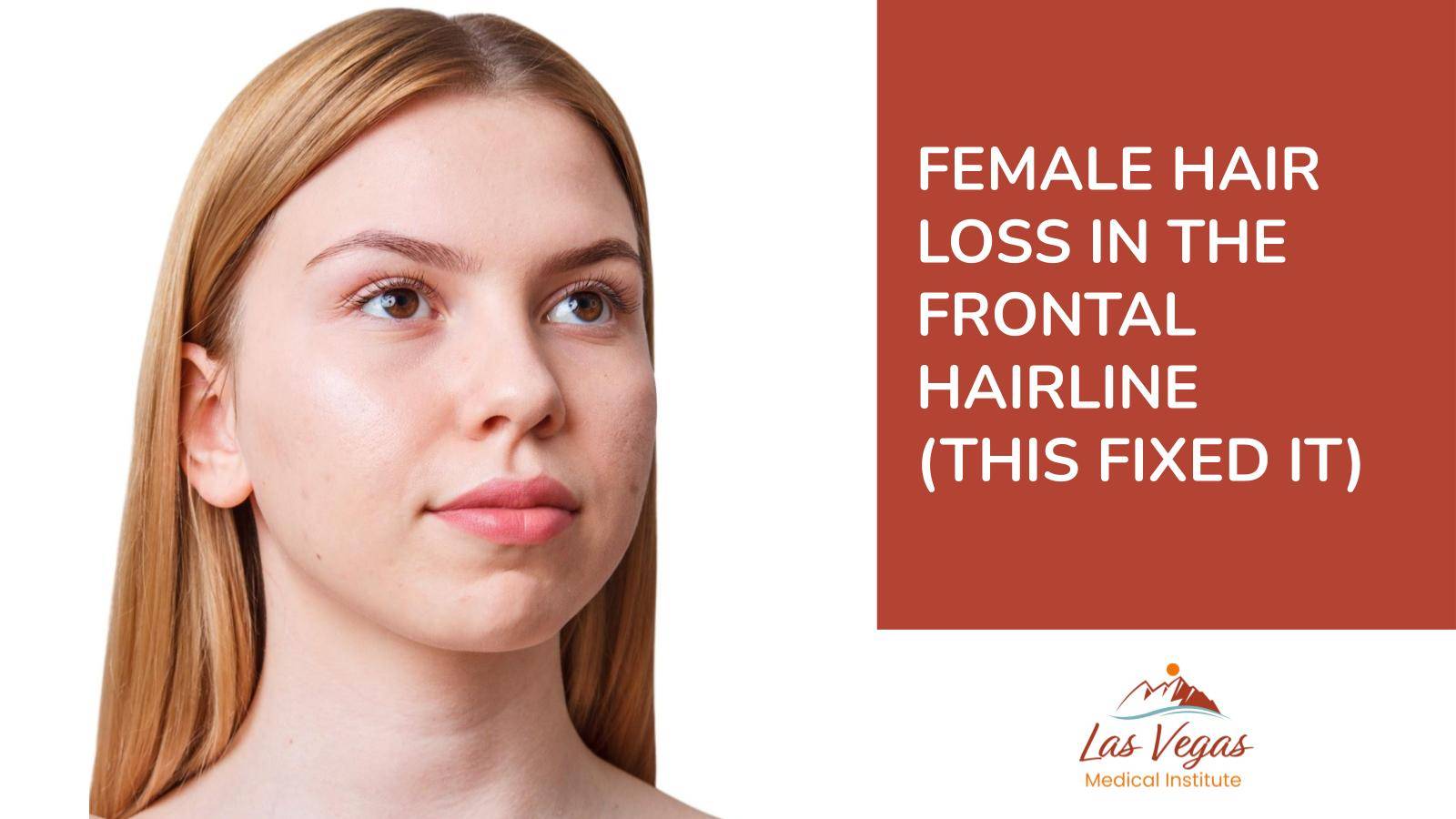
Female hair loss at the frontal hairline is most often caused by frontal fibrosing alopecia or traction alopecia, not normal aging. Early treatment is critical to stop progression and prevent permanent hair loss. A receding hairline, thinning eyebrows, or small bald patches often signal follicle inflammation or scarring. With the right diagnosis, it is possible to slow thinning, protect remaining hair density, and sometimes support regrowth.
Effective treatment begins with identifying the exact type of hair loss and removing damaging hair care habits. Targeted therapies may include topical medications, injections, or laser treatments under specialist care. Early diagnosis of frontal fibrosing alopecia helps prevent irreversible frontal hairline baldness.
Key Takeaways of Female Hair Loss in the Frontal Hairline
Female hair loss frontal hairline is most often caused by frontal fibrosing alopecia or traction alopecia.
Seeking prompt evaluation from a specialist helps distinguish a normal maturing hairline from true disease and guides targeted treatment.
Effective hair restoration treatment plans often combine topical minoxidil, hormone‑modulating medications, and options like Platelet-Rich Plasma.
Changing tight hairstyles, limiting heat and harsh chemicals, and adopting gentle daily hair care can halt or reverse traction‑related frontal hair loss in its early stages.
Lifestyle factors such as nutrition, stress management, and sun protection around the hairline support medical treatment and help maintain healthier hair growth over time.
Emotional support, open communication with loved ones, and, when needed, counseling can ease the psychological impact of female hair loss frontal hairline and improve quality of life.
Frontal Hairline Thinning in Women
Female frontal hairline thinning usually reflects a specific type of hair loss, not just general shedding, so understanding what is happening to the hair follicles matters.
Female hair loss frontal hairline: what is really happening?
When female hair loss affects the frontal hairline, the visible change is less hair at the temples and forehead, but the process begins deeper in the skin. In conditions like frontal fibrosing alopecia, the immune system attacks the follicle, leading to inflammation, scarring, and eventual destruction of the hair root. Over time, this creates a smooth, pale band of skin where hair once grew.
Female androgenetic alopecia, a form of androgenic alopecia, can also contribute to thinning hair near the hairline, though it more often affects the part and crown. Here, male hormones and genetic sensitivity shrink follicles gradually, so each hair shaft grows in finer and shorter until density drops. This is different from sudden excessive hair loss, where many hairs fall out at once during the shedding phase.
Key patterns seen in female hair loss at the frontal hairline
Frontal fibrosing alopecia often causes band‑like hairline recession and may include eyebrow loss and tiny rough bumps around follicles. This condition is more common in postmenopausal women, but it also appears in some women of African descent at younger ages. Traction alopecia typically begins around the edges where tight ponytails, braids, or hair accessories pull hair day after day.
In both patterns, women may notice hair shedding, itching, burning, or a shiny appearance to thinning areas. Some experience breast tenderness or other hormonal changes around the same time, especially if hair loss in women coincides with menopause or new birth control pills. Because several conditions can overlap, early treatment guided by a dermatologist helps protect remaining hair and avoid permanent changes to the frontal hairline.
Common Causes Of Frontal Hair Loss In Women
Female hair loss at the frontal hairline usually comes from a mix of medical, hormonal, and mechanical factors rather than a single trigger.
Hormonal And Medical Triggers
Hormonal shifts are a major driver of hair loss in women, especially at the hairline. After menopause, estrogen levels fall and the balance of male hormones can change, leading to female pattern hair loss and sometimes female pattern baldness.
Other medical issues can also trigger thinning hair or significant hair loss around the frontal hairline. Thyroid disease, autoimmune disease such as lupus, and iron deficiency may all weaken follicles and shorten the growth phase of the hair cycle. In alopecia areata, an immune attack can create sharply defined bald patches that occasionally involve the frontal hairline, eyebrows, or beard area in men.
Some women notice hair loss occurs after starting or stopping hormonal contraception. Progesterone‑based birth control pills or injections may, in rare cases, unmask androgen sensitivity and speed hair thinning. Blood tests ordered by a dermatologist help uncover nutritional deficiency, thyroid problems, or other internal causes that need treatment alongside any scalp‑focused therapy.
Hairstyles, Hair Care Habits, And Traction
Tight hairstyles are one of the most common preventable causes of female hair loss frontal hairline. Tight ponytails, braids, weaves, and heavy hair extensions place constant tension on the hair shaft and the follicle. Over time, this repeated pull hair effect leads to traction alopecia, first showing as broken hairs and then as receding hairline changes around the edges.
Women who wear tight hairstyles daily, especially those of African descent using braids or weaves long term, are at higher risk of traction alopecia. At first, loosening styles may allow the hair grows back. If traction continues, but, inflammation can scar follicles and cause permanent hair loss along the hairline.
Nutritional, Lifestyle, And Stress-Related Factors
Overall health strongly influences healthy hair growth. Low iron levels, inadequate protein intake, and certain vitamin deficiencies can slow the growth phase and push more follicles into the shedding phase. Many women with hair loss at the frontal hairline also report fatigue, brittle nails, or other signs of nutritional deficiency.
Severe stress, major illness, or surgery may trigger telogen effluvium, a temporary surge in hair shedding across the scalp. While telogen effluvium does not directly cause frontal fibrosing alopecia or traction alopecia, it can reveal existing thinning areas by causing diffuse less hair overall. Smoking and high sun exposure may further weaken follicles, particularly in already inflamed skin.
Spotting The Difference: Receding Hairline Vs. Normal Maturing Hairline
Not every higher hairline means disease: some change is normal with age, but a true receding hairline usually shows clearer warning signs.
When To See A Hair Loss Specialist
A normal maturing hairline in women tends to thin gradually and evenly, often with mild widening of the part rather than sharp hairline recession. The skin still shows normal pores and small hairs. In contrast, frontal fibrosing alopecia or traction alopecia can create a straight or band‑like line of loss, often with pale, shiny skin and fewer visible follicles.
Women should seek early diagnosis when they notice hair loss limited to the frontal hairline, especially with itching, burning, or eyebrow thinning. Any rapidly spreading bald patches, sudden excessive hair loss, or a strong family history of androgenic alopecia also warrant prompt evaluation. Early treatment offers the best chance to stop hair loss, avoid permanent scarring, and possible to regrow hair.
How Frontal Hair Loss Is Diagnosed
Diagnosis usually begins with a detailed medical history and scalp exam. The clinician looks closely at thinning areas, the frontal hairline, eyebrows, and any bald patches to map the pattern. They may gently pull hair to see how many strands come out and examine the hair shaft under magnification.
Blood tests are often ordered to rule out thyroid disease, iron deficiency, or autoimmune disease. When frontal fibrosing alopecia or other scarring processes are suspected, a scalp biopsy is commonly recommended. This small sample is checked under a microscope for specific changes in the hair follicles and surrounding tissue.
Biopsy helps confirm conditions like frontal fibrosing alopecia FFA or female androgenetic alopecia and rules out other rare causes. Once the diagnosis is clear, the dermatologist can design a plan to stop hair loss, support hair regrowth where possible, and monitor for progression. Regular follow‑up visits allow them to adjust medical treatment as the condition stabilizes or changes.
Medical Treatments That Can Help Regrow Or Preserve The Hairline in Female Pattern Hair Loss
Medical treatment for female hair loss at the frontal hairline focuses on calming inflammation, protecting remaining follicles, and encouraging new hair where possible.
Topical And Oral Medications
Topical minoxidil is often the first‑line option to promote hair growth and preserve hair density. It can help both female pattern hair loss and some traction‑related thinning by extending the growth phase. Many women use it alongside other treatments to support fuller hair over time.
For hormonal‑driven thinning, providers may prescribe oral medications that lower the effect of male hormones on the follicle. Spironolactone is widely used off‑label in premenopausal women with androgenetic alopecia to reduce further hair loss. In postmenopausal women, finasteride or dutasteride may be considered under close medical supervision.
Inflammatory and scarring conditions like frontal fibrosing alopecia often require stronger approaches. Some also prescribe hydroxychloroquine or other systemic agents when the immune system plays a large role in follicle damage.
These medications do not cure frontal fibrosing alopecia, but they can slow or stop progression in many patients. The goal is to prevent additional permanent hair loss and maintain as natural a hairline as possible. Combination therapy, supported by gentle hair care, often gives better results than a single method.
Procedures: PRP, Low-Level Laser, And Hair Transplant Options
Office‑based procedures can support medical therapy and, in some cases, improve hair thickness near the frontal hairline.
Platelet‑rich plasma (PRP) injections use a patient's own concentrated platelets to potentially stimulate hair follicles. Many women report reduced hair shedding and modest hair regrowth after a series of sessions.
Low‑level laser treatments delivered in a clinic setting may also help stimulate hair growth by increasing blood flow and cellular activity in the scalp. These are usually combined with medications rather than used alone, especially in female pattern hair loss or early traction alopecia.
For stable, long‑standing scarring where hair will not return on its own, carefully planned hair transplant procedures may be an option. Surgeons can move follicles from denser areas to rebuild the frontal hairline, provided the disease is inactive. Results depend on available donor hair and the underlying type of hair loss.
Transplant surgery is generally not recommended while frontal fibrosing alopecia is still active, because new grafts may be attacked by the same process. A thorough evaluation by a hair loss specialist helps women weigh risks, cost, and expected cosmetic improvement.
Frequently Asked Questions About Female Hair Loss in the Frontal Hairline (This Fixed It)
What are the most common causes of female hair loss at the frontal hairline?
The most common causes are frontal fibrosing alopecia (a scarring autoimmune condition) and traction alopecia from tight hairstyles or heavy extensions. Hormonal shifts, thyroid problems, autoimmune disease, and iron deficiency can also contribute, so a full medical evaluation is important to identify all underlying triggers.
How can I tell if my receding hairline is normal aging or female hair loss frontal hairline?
A normal maturing hairline thins gradually and evenly, with visible pores and fine hairs. Female hair loss frontal hairline often shows a straight or band‑like recession, pale or shiny skin, itching or burning, and sometimes eyebrow thinning. Sudden or localized changes should be checked by a dermatologist or trichologist.
When should I see a specialist for female hair loss frontal hairline?
Schedule an appointment as soon as you notice hairline recession, thinning edges, eyebrow loss, scalp symptoms like burning or itching, or rapidly spreading bald patches. Early diagnosis is critical, especially for scarring conditions like frontal fibrosing alopecia. This prevent permanent loss and protect remaining hair density.
What treatments can help regrow or preserve the female frontal hairline?
Treatment depends on the cause but may include topical minoxidil, anti‑androgen tablets such as spironolactone or finasteride, corticosteroid injections, or immune‑modulating drugs for scarring alopecias. PRP injections, low‑level laser therapy, and, in stable cases, hair transplant surgery can complement medical therapy. Gentle, low‑tension styling is always essential.
Can changing hairstyles reverse traction alopecia along the hairline?
If traction alopecia is caught early, switching to loose styles, avoiding tight braids and heavy extensions. Minimizing heat and harsh chemicals can allow many follicles to recover. Once scarring develops, regrowth is limited and options shift toward stabilizing loss, camouflage, or, in selected cases, hair transplantation.
Conclusion and Summary of Female Hair Loss in the Frontal Hairline (This Fixed It)
Female hair loss at the frontal hairline is common, but it is not something women must simply accept as "getting older." Conditions like frontal fibrosing alopecia and traction alopecia can often be slowed, and sometimes partially reversed, when recognized early.
The most important steps are noticing early warning signs, seeking prompt evaluation from a hair‑loss specialist, and following a tailored plan that combines medical treatment with gentle hair care. With realistic expectations, emotional support, and consistent follow‑up, many women can protect their remaining follicles, reduce the risk of permanent hair loss, and feel more in control of their appearance and health going forward.
Ready to Restore Your Hair with Non-Surgical Hair Restoration in Las Vegas?
Thicker Hair. Natural Regrowth. No Downtime.
Unlike hair transplants that require invasive surgery, scarring, and weeks of recovery, our advanced platelet-rich plasma PRP hair restoration uses your body's own healing platelets to naturally stimulate hair follicles and regrow your hair. It's like waking up dormant follicles and giving them the growth factors they need to thrive again.
This isn't hiding under toupees or settling for temporary hair replacement systems. Our medical-grade hair restoration without surgery delivers concentrated growth factors directly into your scalp, targeting the root cause of thinning and triggering natural regrowth where you need it most.
Are You Experiencing These Common Hair Loss Problems?
Receding hairline that keeps moving back.
Thinning crown that’s becoming more visible.
Bald spots that won’t fill in.
Male pattern baldness affecting your confidence.
Female pattern baldness that’s getting worse.
Patchy hair loss in multiple areas.
Frontal hairline thinning and recession.
Sudden hair loss that appeared out of nowhere.
Experience Benefits You Can Actually FEEL:
Natural hair regrowth without surgery or scars.
Thicker, fuller hair that’s actually yours.
No more hiding under toupees or wigs.
Effective non-surgical hair restoration for men and women.
Minimally invasive with no downtime.
Safe, natural solution using your own blood platelets.
Real hair replacement from your own follicles.
And much more!
Why settle for temporary cover-ups or invasive transplants when you can regrow your own hair naturally? PRP hair restoration is trusted by men and women worldwide who've experienced real regrowth in areas they thought were gone forever. Many patients see visible improvements within months, with continued thickening over time.
At Las Vegas Medical Institute, we blend advanced PRP hair restoration technology with physician-led expertise for hair restoration results that restores your hair, appearance, and your confidence.
Ready to regrow your hair naturally? Schedule Your Hair Restoration Consultation here, or call us today at (702) 577-3174 and discover how non-surgical hair restoration is helping men and women across Las Vegas reclaim their full, healthy hair!
Cover Image Credit: LoveGalaxy / 123RF.com (Licensed). Photo Illustration by: By Las Vegas Medical Institute.
Morpheus8 before and after treatment photos typically show firmer skin, softer wrinkles, and more defined contours because the procedure triggers deep collagen remodeling over time. In clinical practice, most patients see subtle tightening within a few weeks and more dramatic changes in 3–6 months, especially on the face, neck, and areas with skin laxity. The…
What is Morpheus8 treatment? It is a minimally invasive treatment that combines microneedling with radiofrequency energy to tighten skin, remodel tissue, and improve texture. In one appointment at a medical office or med spa, ultra-fine needles create tiny punctures while RF energy heats deeper layers, stimulating collagen production and the body's natural healing process.This dual…
PRF vs PRP hair restoration are two advanced regenerative treatments that use a person's own blood to stimulate hair growth and improve hair density. Both platelet rich plasma (PRP) and platelet rich fibrin (PRF) deliver concentrated platelets and growth factors into the scalp, helping awaken dormant hair follicles and slow ongoing hair loss. The key…
Does PRP hair restoration work? In many patients with early-to-moderate thinning, platelet rich plasma (PRP) therapy can significantly increase hair density, improve hair thickness, and reduce shedding. It does this by using growth factors from the patient's own blood to stimulate hair follicles, prolong the growth phase, and stimulate hair growth in medically supervised office…