Does PRP hair restoration work? In many patients with early-to-moderate thinning, platelet rich plasma (PRP) therapy can significantly increase hair density, improve hair thickness, and reduce shedding. It does this by using growth factors from the patient's own blood to stimulate hair follicles, prolong the growth phase, and stimulate hair growth in medically supervised office treatments.
70 to 80% of appropriately selected patients see measurable improvements in hair regrowth and overall scalp health after a series of PRP hair restoration injections. Results are strongest in androgenetic alopecia and female pattern baldness when hair follicles are still present but underperforming. Patients benefit most when treatment begins early in the course of hair thinning.
Key Takeaways of Does PRP Hair Restoration Work?
PRP hair restoration works best for early-to-moderate thinning, with studies showing about 70–80% of well-selected patients gaining measurable improvements in hair density and thicker hair.
The treatment uses growth factors from your own platelet rich plasma to stimulate underperforming hair follicles, reduce shedding, and prolong the hair growth phase.
Results from PRP for hair loss typically appear gradually, less shedding within a few months and visible thickening around 3–6 months.
Compared with other hair loss treatments, PRP offers a safe, minimally invasive, in-office option that often works best when combined with therapies like minoxidil or hair transplantation rather than used alone.
What PRP Hair Restoration Is and How It Works
PRP hair restoration is a medical office procedure that uses concentrated platelets from a patient's own blood to stimulate hair follicles and promote natural hair growth.
How PRP Therapy Works
During PRP therapy for hair loss, a clinician performs a small blood draw, similar to standard lab work. The vial is placed in a centrifuge, which spins the sample to separate red blood cells and white blood cells from the platelet rich plasma. This platelet rich plasma PRP layer contains a very high concentration of growth factors compared with normal blood.
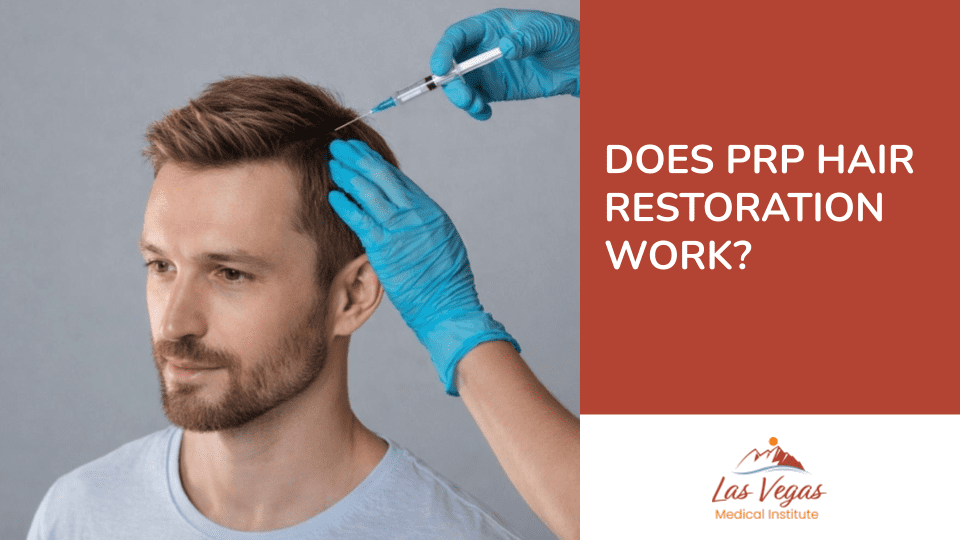
Those growth factors include vascular endothelial growth factor, epidermal growth factor, fibroblast growth factor, and others involved in wound healing and tissue repair. The provider then injects the PRP for hair into the scalp using a fine needle, placing small amounts across areas of hair thinning. These PRP injections are typically spaced about one centimeter apart along the affected areas. The goal is to stimulate hair follicles evenly, improve blood flow, and support healthier hair growth over time.
Who Is a Good Candidate for PRP Hair Treatment?
PRP hair treatment is best suited to patients with early-to-moderate hair thinning who still have visible, though weakened, hair follicles on the scalp.
The ideal candidate often has androgenetic alopecia or pattern baldness, where hair loss occurs gradually and hair shafts become finer over time. Men and women with early stage hair thinning usually respond better than those with long-standing, completely bald patches. In advanced stages, dormant hair follicles may have been replaced by smooth scalp skin, which responds poorly to PRP treatments alone.
Female pattern baldness can also respond well, especially when there is diffuse thinning on the top of the scalp rather than complete loss. Patients should have realistic expectations: PRP for hair loss is designed to improve hair health, hair density, and hair thickness, not to recreate a teenage hairline.
Health Medical History
Good general health also matters. Conditions that affect wound healing, such as uncontrolled diabetes or certain autoimmune diseases, may impact results. Very low platelet counts can also limit the concentration of growth factors in PRP. A thorough evaluation with a dermatologist or hair restoration specialist helps determine whether PRP hair restoration is the most appropriate hair loss treatment for each case.
Benefits and Limitations of PRP Hair Restoration
PRP hair restoration offers several compelling benefits, but it also has clear limitations that patients should understand before committing to treatment.
Platelet-rich plasma Benefits in Hair Growth
The most significant benefit is that PRP uses a patient's own blood, which eliminates the risk of allergy or rejection.
Stimulates dormant hair follicles to re-enter the growth (anagen) phase
Increases hair thickness and overall hair shaft diameter
Reduces daily shedding in early-stage hair thinning
Improves scalp blood circulation around follicles
Uses your own blood, so allergy risk is extremely low
On the limitation side, results are variable and depend heavily on patient selection and treatment protocol. PRP is much less effective for areas with extensive lost hair or scarring alopecia, where follicles are absent or replaced by scar tissue. It also requires a series of initial sessions and then maintenance treatments to sustain benefits over the long term.
Finally, while PRP hair restoration can be cost-effective compared with some surgical options, expenses add up across multiple visits. It should be viewed as an ongoing medical therapy for a chronic condition, not a one-time cure for hair loss.
What to Expect During PRP Hair Treatment for Hair Regrowth
PRP hair treatment is an in-office procedure that usually takes about an hour from start to finish.
Initial Evaluation and Preparation
At the visit, a clinician reviews medical history, current medications, and any recent changes in hair loss. Photographs may be taken to track progress over time. Next, a small blood draw is performed, usually from a vein in the arm, similar to routine lab work. The sample is then placed into a centrifuge for about ten minutes to separate the platelet-rich plasma from red and white blood cells.
Preparing the Scalp and PRP Processing
While the centrifuge runs, the scalp is cleansed and sometimes a numbing cream or local anesthetic is applied for comfort. Once the platelet-rich plasma is ready, it is loaded into syringes and a series of small PRP injections are placed across the thinning areas. Most patients feel brief pinches or pressure but tolerate the treatment well.
Aftercare and Recovery
After treatment, mild tenderness, swelling, or pinpoint redness may appear at the injection sites and usually resolves within a day or two. Post-treatment instructions often include avoiding vigorous scalp massage, hot showers, or hair coloring for a short period. Most patients complete an initial series of three to eight sessions spaced several weeks apart, followed by periodic maintenance treatments.
How PRP Compares to Other Hair Restoration Methods
PRP for hair loss sits between topical medications and surgical hair transplantation, often serving as a bridge or complement rather than a replacement.
PRP vs Topical Treatments (Minoxidil)
Compared with topical minoxidil, PRP injections do not require daily application, which many patients find appealing. Instead, treatment involves periodic in-office sessions to rejuvenate hair follicles. For some, this improves adherence. But, minoxidil remains an important option, and many specialists use both approaches for promoting hair growth. Combining them can address hair follicles from inside and outside the scalp.
PRP vs Oral Medications
Relative to oral medications for pattern baldness, PRP avoids systemic drug exposure and related side effects. It uses growth factors to stimulate hair follicles locally. That said, medications can help reduce hormonal triggers of androgenetic alopecia, so a combined plan can be more effective, especially in aggressive cases.
PRP vs Hair Transplant Surgery
Compared with hair transplant surgery, PRP is less invasive, has almost no downtime, and costs less per session. It cannot relocate hair from dense areas to bald areas, though. Surgeons often use PRP before and after hair transplantation to support graft survival, accelerate wound healing, and enhance final density. For some patients, a staged approach works well: PRP to stabilize early hair thinning, followed by targeted transplantation if areas of lost hair become more pronounced.
How to Decide If PRP Hair Restoration Is Right for You
Deciding whether PRP hair restoration is appropriate involves balancing expectations, medical factors, and long-term commitment.
Medical Evaluation and Hair Loss Type
Patients should start with a thorough evaluation by a dermatologist or hair restoration specialist experienced in platelet rich plasma therapy.
he clinician can determine what type of hair loss is present, whether androgenetic alopecia, alopecia areata, or scarring alopecia, and whether enough hair follicles remain to justify PRP. They also review health conditions, medications, and prior treatments that might affect results or safety.
Setting Realistic Goals
It helps to clarify personal goals. Someone hoping to completely regrow hair in long-bald areas may be disappointed with PRP alone, while someone wanting to slow progression and improve hair thickness may be an excellent candidate. Understanding that multiple sessions and maintenance treatments are usually necessary is crucial.
Time and Financial Commitment
Finally, patients should consider cost and time. PRP is a recurrent office procedure, not a single injection. When expectations align with what the treatment can realistically deliver, and the pattern of hair thinning matches known success profiles, PRP hair restoration can be a valuable part of a broader plan to address hair loss and preserve hair health over the long term.
Frequently Asked Questions About Does PRP Hair Restoration Work?
Does PRP hair restoration work for thinning hair?
PRP hair restoration works moderately well for many people with early-to-moderate thinning. Studies show about 70–80% of appropriately selected patients see increased hair density and thickness, plus reduced shedding, after a series of treatments. PRP for hair loss results are strongest when hair follicles are still present and treatment is started early.
How long does it take for PRP hair restoration to show results?
Most patients notice less shedding within a few weeks to a couple of months. Visible improvements in hair thickness and density usually appear after 3–6 months, once new hairs cycle into growth. Benefits often peak around 6–12 months and require periodic maintenance sessions to sustain long-term results.
Who is the best candidate for PRP hair restoration?
The best candidates have early-to-moderate androgenetic alopecia or female pattern thinning with visible but weakened hairs. Men and women in generally good health, without severe bald patches or extensive scarring alopecia, tend to respond better. A dermatologist or hair restoration specialist can confirm suitability after a scalp and medical evaluation.
Is PRP hair restoration better than hair transplant surgery?
PRP hair restoration in Las Vegas, NV is less invasive, has minimal downtime, and costs less per session than hair transplant surgery, but it cannot move hair from one area to another. Transplants are better for established bald spots, while PRP is ideal for thickening existing hair and is often used alongside transplants to enhance results.
How many PRP sessions are usually needed and how much does it cost?
Most protocols recommend an initial series of 3–4 PRP hair restoration sessions spaced 4–6 weeks apart, with maintenance treatments once or several times per year. Costs vary by region and provider but can be significant over time, and PRP for hair loss is rarely covered by insurance.
Conclusion and Summary of Does PRP Hair Restoration Work?
PRP hair restoration offers a science-based option for patients with early hair thinning who want to strengthen existing follicles rather than replace lost hair. By concentrating growth factors from your own blood, the treatment supports dermal papilla cells, improves local blood supply, and promotes cell repair that can increase hair count, thickness, and overall scalp health as treatment progresses.
Results develop gradually and require consistency, including proper post-treatment care and periodic maintenance sessions. While PRP is not a cure for advanced baldness, it can slow shedding, improve hair quality, and complement other treatments when used as part of a long-term hair loss plan.
Ready to Restore Your Hair with Non-Surgical Hair Restoration in Las Vegas?
Thicker Hair. Natural Regrowth. No Downtime.
Unlike hair transplants that require invasive surgery, scarring, and weeks of recovery, our advanced platelet-rich plasma PRP hair restoration uses your body's own healing platelets to naturally stimulate hair follicles and regrow your hair. It's like waking up dormant follicles and giving them the growth factors they need to thrive again.
This isn't hiding under toupees or settling for temporary hair replacement systems. Our medical-grade hair restoration without surgery delivers concentrated growth factors directly into your scalp, targeting the root cause of thinning and triggering natural regrowth where you need it most.
Are You Experiencing These Common Hair Loss Problems?
Receding hairline that keeps moving back.
Thinning crown that’s becoming more visible.
Bald spots that won’t fill in.
Male pattern baldness affecting your confidence.
Female pattern baldness that’s getting worse.
Patchy hair loss in multiple areas.
Frontal hairline thinning and recession.
Sudden hair loss that appeared out of nowhere.
Experience Benefits You Can Actually FEEL:
Natural hair regrowth without surgery or scars.
Thicker, fuller hair that’s actually yours.
No more hiding under toupees or wigs.
Effective non-surgical hair restoration for men and women.
Minimally invasive with no downtime.
Safe, natural solution using your own blood platelets.
Real hair replacement from your own follicles.
And much more!
Why settle for temporary cover-ups or invasive transplants when you can regrow your own hair naturally? PRP hair restoration is trusted by men and women worldwide who've experienced real regrowth in areas they thought were gone forever. Many patients see visible improvements within months, with continued thickening over time.
At Las Vegas Medical Institute, we blend advanced PRP hair restoration technology with physician-led expertise for hair restoration results that restores your hair, appearance, and your confidence.
Ready to regrow your hair naturally? Schedule Your Hair Restoration Consultation here, or call us today at (702) 577-3174 and discover how non-surgical hair restoration is helping men and women across Las Vegas reclaim their full, healthy hair!
Cover Photo Illustration by: By Las Vegas Medical Institute.
Morpheus8 for arms is a minimally invasive treatment that combines microneedling with radiofrequency energy to tighten loose skin, improve skin texture, and support collagen production in the deeper layers of the skin. For patients bothered by crepey arm skin, mild sagging skin, or uneven texture, it offers a non surgical tightening option with minimal downtime…
Morpheus8 cost in Las Vegas typically runs $1,000–$5,000, depending on the treatment area, and the number of sessions. In plain terms: smaller zones (like under-eyes or targeted acne scars) sit closer to the low end, while larger body areas and more intensive settings push pricing toward the top.For most patients, the fastest way to budget…
Morpheus8 for buttocks is a minimally invasive RF microneedling treatment that can tighten loose skin, improve skin texture, and reduce cellulite-like dimpling by stimulating collagen production, especially when skin laxity is mild. It works by delivering radiofrequency energy through microneedles to heat deeper layers, which helps stimulate collagen production and support firmer skin over the…
Dr. Lucia Mireles-Chavez of Las Vegas Medical Institute was featured on KTNV’s Morning Blend, where she discussed how Morpheus8 and QuantumRF can help improve skin tightening and body contouring with minimal downtime. Patients looking for skin tightening treatments often want to improve skin laxity, sagging skin, and loose skin without committing to a full surgical…