Signs of Female Pattern Baldness: How to Spot Hair Loss Early
Authored by: Dr. Juan Chavez, MD and Dr. Lucia Mireles-Chavez, MD
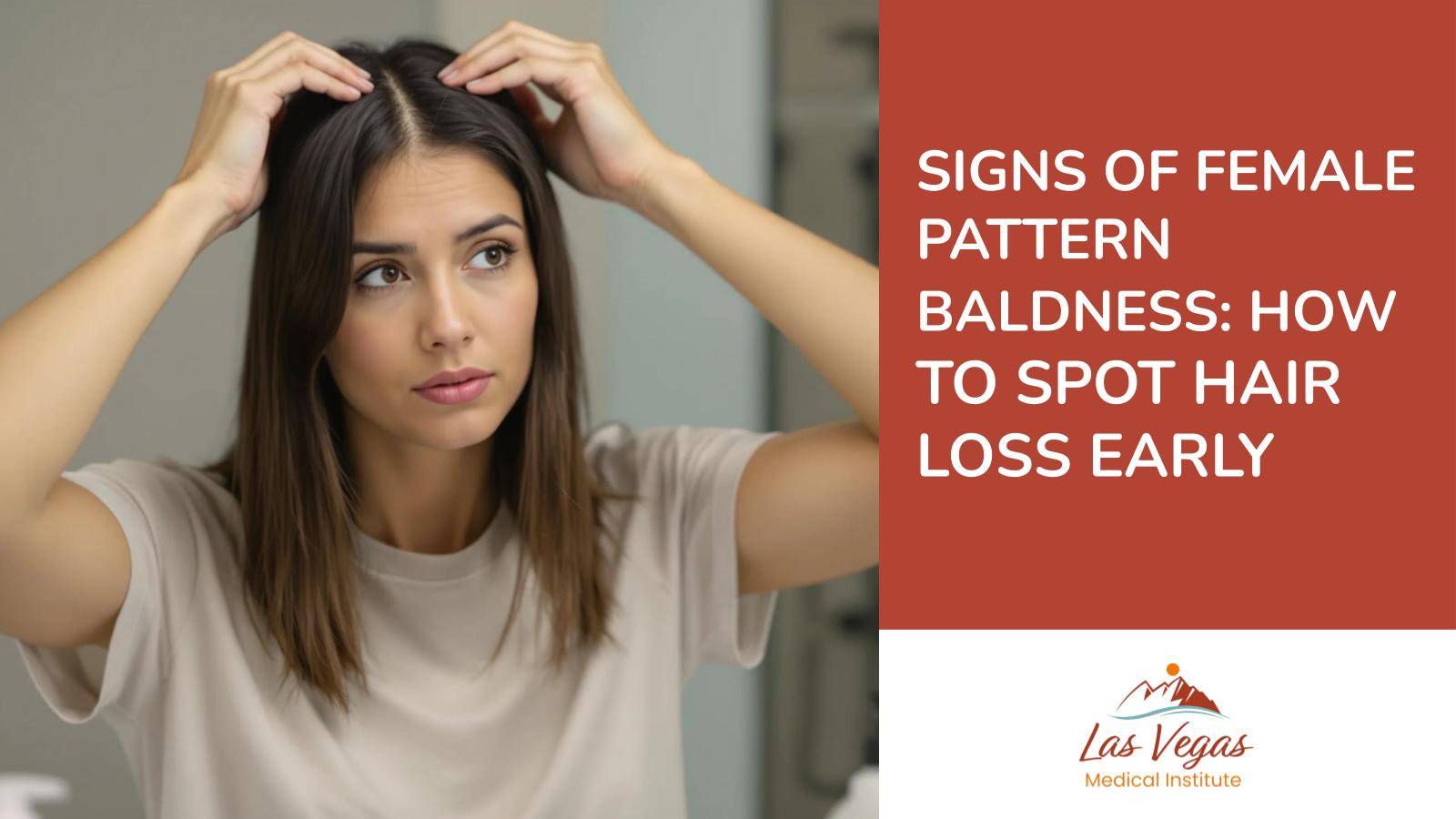
The clearest signs of female pattern baldness are gradual hair thinning on the crown, a widening center hair part, and reduced hair volume while the frontal hairline usually stays intact. This female pattern hair loss, also called androgenetic alopecia, creeps up slowly, so spotting it early is critical for protecting hair density. When caught in the first stages, many women can slow further hair loss and even stimulate hair growth with timely medical care.
Early on, most women notice more hair shedding in the shower or brush, a see-through look at the center part. Over time, the hair follicles along the top of the scalp produce finer, shorter hairs, leading to diffuse hair thinning rather than round bald patches. These changes differ from temporary hair shedding or sudden hair loss after illness and usually reflect an underlying genetic predisposition to pattern hair loss.
Key Takeaways of Signs of Female Pattern Baldness
What Female Pattern Baldness Is And How It Differs From Other Hair Loss
Female pattern baldness is the most common cause of female hair loss and follows a very specific pattern that sets it apart from many other hair loss conditions.
Understanding Female Pattern Baldness Androgenetic Alopecia
Female pattern baldness, or androgenetic alopecia, is driven by a combination of genetic predisposition and sensitivity of hair follicles to androgens. Over years, these sensitive scalp hairs miniaturize: each hair shaft grows in thinner, shorter, and lighter, so overall hair density slowly falls.
In healthy hair, normal hair growth cycles move through a long growth phase, a brief transition, then a resting phase. With female pattern baldness, the growth phase shortens and the resting phase lengthens, so more follicles sit idle. Many women notice this as gradual thinning hair over the crown rather than dramatic bald patches.
How Female Pattern Hair Loss Differs From Other Hair Disorders
Unlike male pattern baldness, which often shows a receding hairline or distinct bald spots, the female pattern usually preserves the frontal hairline. Instead, the center hair part widens and the crown becomes see-through. The overall look is diffuse hair thinning, especially over the top and center of the scalp.
This is very different from alopecia areata, which causes patchy hair loss and smooth round areas of complete baldness. It also differs from telogen effluvium or chronic telogen effluvium, where temporary hair loss or temporary hair shedding affects the entire scalp after a trigger like illness, thyroid disease, iron deficiency, or birth control pills. Getting the pattern right helps doctors choose the correct, targeted treatment options.
Androgenic Alopecia Versus Scarring And Inflammatory Conditions
Some hair disorders permanently damage follicles, which is why accurate diagnosis matters. Scarring alopecia and central centrifugal cicatricial alopecia cause inflammation and scarring in the scalp skin, which can lead to permanent hair loss if untreated.
Female pattern hair loss, by contrast, doesn't scar the scalp. The follicles shrink but usually remain present, leaving room for new hair growth if treatment begins early. When the pattern looks unusual or the scalp skin appears inflamed, dermatologists may order a skin biopsy or scalp biopsy to distinguish androgenic alopecia from these other conditions before recommending a plan.
Early, Subtle Signs of Female Pattern Baldness You Might Be Overlooking
The first signs of female pattern baldness are easy to dismiss as a "bad hair month," but subtle clues often appear years before severe thinning.
Mild Diffuse Thinning And Increased Hair Shedding
One early warning sign is a slight drop in hair volume, especially at the top of the head. Ponytails feel thinner, and styling that once looked full starts to look flat. This isn't usually dramatic overnight hair loss, but a slow shift in how hair behaves.
Many women also report more hair shedding in the shower, on pillows, or in their hairbrush. Some increase is normal, since resting phase hairs shed every day. But if shedding seems heavier for several months, especially alongside thinning hair, it may signal early pattern hair loss rather than simple seasonal shedding.
Changes In Hair Texture, Styling, And Coverage
As hair follicles miniaturize, the hair shaft becomes finer and more fragile, leading to more frequent hair breakage. Hair that once held a style easily may fall flat, separate at the crown, or expose more scalp under bright light. These are quiet but important indicators that hair density might be dropping.
A widening center hair part is especially telling. When the scalp begins to peek through the center hair part, even in photos or under harsh lighting, that's often one of the clearest early signs of female pattern hair loss. Catching this subtle widening early gives the best chance of slowing further hair loss with professional treatment.
Visible Changes In Your Part And Hairline
The central part and hairline offer some of the most reliable visual clues for identifying female pattern baldness.
Widening Center Hair Part And Reduced Hair Volume
In female pattern baldness, the part line gradually widens over time, especially over the crown and center hair. At first, this might only be visible in bright bathrooms or under sunlight when the scalp suddenly seems more noticeable.
As hair density drops, the top of the scalp can take on a see-through appearance, even if there's still plenty of hair at the sides and back. Most women keep their frontal hairline, but the area just behind it often loses volume. This pattern is a key difference from male pattern hair loss.
Frontal Hairline, Receding Hairline, And Related Conditions
Most women with female pattern baldness don't develop a significant receding hairline. The frontal hairline stays relatively stable while the area just behind it thins. When the frontal hairline does recede, doctors consider frontal fibrosing alopecia, a type of scarring alopecia.
Any noticeable shift in the frontal hairline, especially paired with eyebrow thinning or scalp itching, deserves prompt evaluation. A dermatologist can distinguish between classic female pattern hair loss and these other conditions with a careful scalp exam, medical history, and sometimes a small skin biopsy.
Overall Thinning Versus Patches: What Your Pattern Reveals
Understanding whether hair loss looks diffuse or patchy is one of the fastest ways to narrow down the cause.
Diffuse Hair Thinning On The Crown And Top
Female pattern baldness almost always causes diffuse thinning across the crown and top of the scalp, not isolated bald spots. Hair looks evenly less dense, especially around the center part and upper scalp.
Many women notice that body hair, eyebrows, and the hair at the nape seem unchanged, while only the top loses volume. This classic female pattern helps doctors separate androgenetic alopecia from more generalized or systemic causes of excessive hair loss.
Patchy Hair Loss, Sudden Hair Loss, And Other Conditions
If hair loss appears as smooth, round patches, or if sudden hair loss leaves obvious bare areas, doctors suspect conditions like alopecia areata or other hair disorders. These involve the immune system mistakenly attacking hair follicles and often require different treatment strategies.
Likewise, very rapid diffuse shedding after fever, surgery, childbirth, or major stress suggests telogen effluvium. That type of temporary hair often returns with time once the trigger is corrected. Because treatment outcomes and timeframes differ, anyone with patchy hair loss, abrupt shedding, or near-complete baldness in spots should see a dermatologist quickly for a precise diagnosis.
Other Symptoms To Watch For Besides Shedding
Hair shedding is only one piece of the puzzle. Other symptoms around the scalp and hair quality can signal deeper issues.
Changes In Scalp Visibility, Hair Density, And Hair Quality
One major sign is greater scalp visibility in photos or under store lighting, even when hair is styled as usual. The scalp may seem shiny or more exposed along the part, the crown, or the frontal scalp border.
Hair may feel lighter, weaker, or more flyaway than before. Instead of thick, healthy hair, strands can feel wispy and fragile. Over time, this leads to lower hair volume even if daily shedding doesn't look extreme.
Scalp Health, Itching, And Emotional Impact
Female pattern hair loss itself usually doesn't cause significant itching or pain, but some women notice mild sensitivity. More intense itching, burning, or scaling can point to scalp health issues like skin disease, seborrheic dermatitis, or scarring alopecia.
Beyond physical signs, the emotional impact matters. Many women feel distress, anxiety, or social withdrawal as they lose hair. These feelings are valid and are important reasons to seek professional help. Dermatologists understand how central hair is to identity and can discuss both medical and cosmetic strategies to restore confidence.
When To See A Doctor And What Diagnosis Looks Like
Timing makes a big difference. The earlier female pattern hair loss is evaluated, the more hair can often be preserved.
Warning Signs That Mean It’s Time For An Appointment
It's wise to schedule an office visit with a dermatologist or hair specialist if thinning has continued for more than six months. Persistent or excessive hair loss, especially with a widening part and reduced volume at the crown, shouldn't be ignored.
Other red flags include sudden hair loss without a clear trigger, patchy hair loss, or scalp symptoms like pain or scabbing. A history of thyroid disease, iron deficiency, hormonal shifts, or new medications such as birth control pills also makes professional evaluation more urgent.
How Doctors Diagnose Female Pattern Baldness In The Office
During the visit, the doctor reviews medical history, family history of pattern baldness, and details about when and where hair loss began. They examine the scalp hairs closely, looking at hair density, miniaturization, and the hair growth cycle pattern.
They may order blood tests to check hormone levels, thyroid function, and iron stores, especially in younger women or those with irregular periods. In less typical cases, a scalp biopsy or skin biopsy helps distinguish female pattern hair loss from scarring alopecia, central centrifugal cicatricial alopecia, or other hair disorders. This workup guides a tailored plan that might include topical or oral treatments, in-office laser treatments, or eventually hair transplant surgery if appropriate.
How Female Pattern Baldness Progresses Over Time
Female pattern baldness usually develops slowly across many years, but it tends to follow recognizable stages.
Stage 1: Mild Thinning At The Crown Or Part Line
In Stage 1, changes are subtle and often easiest to see in photographs or under strong light. The center hair part looks just slightly wider, and the scalp may be faintly visible along the crown when the hair is parted.
Most women still have good overall hair volume at this point, and friends or family often don't notice anything different. But, women may see more hair shedding than usual in the shower or brush and may feel that their ponytail is a bit thinner.
At this early stage, hair follicles are miniaturizing but remain very responsive to treatment. Starting medical therapy now offers the best chance to treat female pattern baldness effectively, maintain hair density, and encourage new hair growth.
Stage 2: Widening Part, Reduced Volume, And A See-Through Look
By Stage 2, the widening part line becomes much more obvious, and the crown can look see‑through, especially in overhead lighting. Hair density along the top is clearly reduced compared to the sides and back.
The hair growth cycle is more disrupted, with a larger percentage of follicles in the resting phase. Many women in this stage struggle to hide the thinning with styling alone and begin to feel self‑conscious in photos.
This is often when they seek professional advice, and it's still an excellent time to begin or intensify treatment. In‑office plans may combine oral minoxidil or topical formulations, scalp‑focused hair care, and sometimes procedures like laser treatments to stimulate hair growth. The goal is to halt progression and thicken miniaturized hairs.
Stage 3: Advanced Thinning And Scalp Visibility
Stage 3 represents advanced pattern hair loss, with pronounced thinning over the crown and top and significant scalp visibility. The frontal hairline usually remains, but the area behind it may look sparse and flat.
Some women may fear they are heading toward complete baldness, which is uncommon in female pattern baldness but understandable emotionally. At this point, hair transplant surgery or other surgical restoration options may be considered alongside medical therapies, especially when medical treatment alone can't restore adequate hair volume.
Even in advanced stages, but, continuing treatment helps protect remaining follicles, support scalp health, and prevent further hair loss. Regular follow‑up visits allow adjustments to therapy so women can achieve the best possible coverage and maintain the healthiest hair they can over time.
Frequently Asked Questions About Signs of Female Pattern Baldness: How to Spot Hair Loss Early
What are the first signs of female pattern baldness to watch for?
Early signs of female pattern baldness include increased hair shedding during washing or brushing, mild thinning on the crown, and a widening center hair part where the scalp looks more visible in bright light. Hair may feel less voluminous, with finer, weaker strands that are harder to style.
How do signs of female pattern baldness differ from normal shedding or telogen effluvium?
Normal shedding and telogen effluvium cause diffuse shedding across the whole scalp, often after a clear trigger like illness, stress, or childbirth, and usually improve within six months. Female pattern baldness shows persistent, gradual thinning mainly on the crown and top, with a widening part but a mostly preserved frontal hairline.
How can I tell if my widening part is a sign of female pattern baldness or something else?
If your central part slowly widens over months or years, the crown looks see‑through, and the frontal hairline stays mostly intact, these are classic signs of female pattern baldness. Sudden patchy bald spots, intense itching, redness, or scarring suggest other conditions and should be evaluated by a dermatologist promptly.
When should scheduled a consultation about signs of female pattern baldness?
Schedule a consultation if thinning or a widening part has continued for more than six months, if you’re shedding over roughly 150–200 hairs daily, or if you notice scalp symptoms, patchy loss, or major emotional distress. Early evaluation improves treatment options and helps preserve remaining hair density.
Can early signs of female pattern baldness be reversed or stopped?
While female pattern baldness is hereditary and chronic, catching it early can slow or partially reverse visible thinning. Treatments such as topical or oral minoxidil, anti‑androgen medications, ketoconazole shampoos, and low‑level laser therapy can thicken miniaturized hairs and maintain density when used consistently under medical supervision.
Conclusion and Summary of Signs of Female Pattern Baldness: How to Spot Hair Loss Early
Female pattern baldness rarely appears overnight. It begins with subtle shifts a widening part, softer volume at the crown, and finer strands that gradually replace thicker hairs. Because the follicles are still present in the early stages, recognizing these clues early gives women the best chance to protect density and keep existing hair strong.
The key message is simple: persistent thinning that follows a pattern is not just normal shedding. A timely evaluation can rule out medical conditions, confirm androgenetic alopecia, and start treatment before significant loss develops. With consistent care and appropriate therapy, many women maintain coverage, improve hair quality, and regain confidence long before thinning becomes severe.
Ready to Restore Your Hair with Non-Surgical Hair Restoration in Las Vegas?
Thicker Hair. Natural Regrowth. No Downtime.
Unlike hair transplants that require invasive surgery, scarring, and weeks of recovery, our advanced platelet-rich plasma PRP hair restoration uses your body's own healing platelets to naturally stimulate hair follicles and regrow your hair. It's like waking up dormant follicles and giving them the growth factors they need to thrive again.
This isn't hiding under toupees or settling for temporary hair replacement systems. Our medical-grade hair restoration without surgery delivers concentrated growth factors directly into your scalp, targeting the root cause of thinning and triggering natural regrowth where you need it most.
Are You Experiencing These Common Hair Loss Problems?
- Receding hairline that keeps moving back.
- Thinning crown that’s becoming more visible.
- Bald spots that won’t fill in.
- Male pattern baldness affecting your confidence.
- Female pattern baldness that’s getting worse.
- Patchy hair loss in multiple areas.
- Frontal hairline thinning and recession.
- Sudden hair loss that appeared out of nowhere.
Experience Benefits You Can Actually FEEL:
- Natural hair regrowth without surgery or scars.
- Thicker, fuller hair that’s actually yours.
- No more hiding under toupees or wigs.
- Effective non-surgical hair restoration for men and women.
- Minimally invasive with no downtime.
- Safe, natural solution using your own blood platelets.
- Real hair replacement from your own follicles.
- And much more!
Why settle for temporary cover-ups or invasive transplants when you can regrow your own hair naturally? PRP hair restoration is trusted by men and women worldwide who've experienced real regrowth in areas they thought were gone forever. Many patients see visible improvements within months, with continued thickening over time.
At Las Vegas Medical Institute, we blend advanced PRP hair restoration technology with physician-led expertise for hair restoration results that restores your hair, appearance, and your confidence.
Ready to regrow your hair naturally? Schedule Your Hair Restoration Consultation here, or call us today at (725) 258-5864 and discover how non-surgical hair restoration is helping men and women across Las Vegas reclaim their full, healthy hair!
Cover Photo Illustration by: By Las Vegas Medical Institute.