VO2 Testing: Understanding Your Body’s Oxygen Usage and Performance
VO2 testing is a valuable tool for assessing an individual's oxygen consumption and aerobic capacity. By measuring the maximum volume of oxygen the body can utilize during intense exercise, VO2 testing provides critical insights into cardiovascular fitness and athletic performance. Whether conducted for competitive training, endurance sports, or general fitness improvements, this assessment helps determine physiological efficiency and potential areas for enhancement.
Understanding VO2 testing
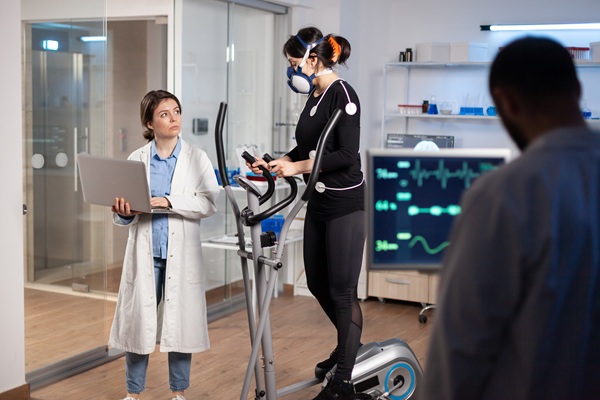
VO2 testing, also known as a maximal oxygen uptake assessment, measures how well your body uses oxygen during exercise. It is expressed in milliliters of oxygen per kilogram of body weight per minute (ml/kg/min). The test usually involves a step-by-step exercise routine on a treadmill or stationary bike connected to a metabolic cart. This machine records respiratory gas exchanges, tracking how efficiently oxygen reaches the participant's muscles.
The results of the VO2 test help to assess the participant's aerobic capacity, how efficiently their body uses energy, and their endurance levels. The higher the number, the better the participant's aerobic fitness. Higher VO2 max values usually indicate better cardiovascular fitness. In contrast, lower values may suggest challenges in aerobic performance.
Benefits of VO2 testing
Improves athletic training strategies
One of the main benefits of VO2 testing is that it helps improve training plans. By finding out their VO2 max, the participant can customize their workouts to boost endurance and aerobic efficiency. The test also gives them accurate information on how their body burns calories, which helps the participant understand how to best utilize their energy.
Can detect cardiovascular limitations
VO2 testing can also help detect cardiovascular or pulmonary limitations. It can reveal performance barriers related to heart or lung function, making it useful for athletes and those with medical conditions like congenital heart disease. Moreover, regular testing allows for continuous monitoring of fitness progress, helping individuals assess improvements in aerobic capacity over time.
Personalized heart rate zones
VO2 testing helps participants find their heart rate zones. These zones provide the most useful intensity levels for different types of workouts. As a result, the participant can better achieve their cardiovascular training and overall athletic goals.
Ideal candidates for VO2 testing
VO2 testing is valuable for a range of individuals. For example, endurance athletes like marathon runners and cyclists use VO2 testing to refine their training strategies. Those participating in team sports like football, basketball, and hockey can also benefit from improved aerobic performance.
Additionally, fitness enthusiasts looking to optimize their workouts and track cardiovascular improvements may find VO2 testing useful. Beyond athletes, individuals in medical or rehabilitation programs can use VO2 testing to assess recovery and monitor progress, particularly those with cardiovascular or pulmonary conditions.
How VO2 testing works
During a VO2 test, participants engage in progressive exercise where the practitioner gradually increases the intensity until they reach exhaustion. They will wear a mask to collect exhaled gases, which are analyzed to determine oxygen consumption and carbon dioxide production. The practitioner will also monitor the participant's heart rate data, providing additional insight into their cardiovascular efficiency.
The test follows a structured protocol, including the following phases:
Baseline measurement: The practitioner records the participant's resting oxygen consumption to establish a baseline.
Warm-up: A light-intensity activity prepares the body for maximal exertion.
Incremental load increase: The practitioner gradually increases treadmill speed or cycling resistance, pushing the cardiovascular system to its limits.
Maximal effort: The participant continues until the practitioner observes voluntary exhaustion or a plateau in oxygen uptake, indicating that the VO2 max has been reached.
Recovery: The practitioner collects post-exercise data to assess the patient's recovery and heart rate trends.
Results are generally categorized based on age and fitness level. Elite endurance athletes often display significantly higher VO2 max values than less active individuals. For example, an untrained individual may have a VO2 max of approximately 30-40 ml/kg/min. In contrast, a highly trained endurance athlete can achieve values exceeding 70 ml/kg/min. While genetics can influence an individual's baseline aerobic capacity, structured training regimes can enhance their VO2 max over time.
Improving VO2 max through training
Several training methods can help improve VO2 max. High-intensity interval training (HIIT) involves short bursts of intense activity followed by rest periods. This method is effective because it challenges the individual's cardiovascular system. Endurance training, like long-duration aerobic exercises, helps the body use oxygen more efficiently.
Additionally, non-aerobic-based strength training can improve muscle efficiency and how oxygen is delivered. If the individual has the option to train in high-altitude areas, this can lead to changes in the body that increase VO2 max. Eating well and staying hydrated can also improve oxygen transport and energy during exercise, boosting the individual's overall aerobic performance.
VO2 testing can help take you to the next level
VO2 testing is a powerful tool for evaluating aerobic capacity and optimizing athletic performance. Are you ready to take your game to the next level? Call our Las Vegas wellness center to learn more about our services or to schedule a consultation.
Morpheus8 for arms is a minimally invasive treatment that combines microneedling with radiofrequency energy to tighten loose skin, improve skin texture, and support collagen production in the deeper layers of the skin. For patients bothered by crepey arm skin, mild sagging skin, or uneven texture, it offers a non surgical tightening option with minimal downtime…
Morpheus8 cost in Las Vegas typically runs $1,000–$5,000, depending on the treatment area, and the number of sessions. In plain terms: smaller zones (like under-eyes or targeted acne scars) sit closer to the low end, while larger body areas and more intensive settings push pricing toward the top.For most patients, the fastest way to budget…
Morpheus8 for buttocks is a minimally invasive RF microneedling treatment that can tighten loose skin, improve skin texture, and reduce cellulite-like dimpling by stimulating collagen production, especially when skin laxity is mild. It works by delivering radiofrequency energy through microneedles to heat deeper layers, which helps stimulate collagen production and support firmer skin over the…
Dr. Lucia Mireles-Chavez of Las Vegas Medical Institute was featured on KTNV’s Morning Blend, where she discussed how Morpheus8 and QuantumRF can help improve skin tightening and body contouring with minimal downtime. Patients looking for skin tightening treatments often want to improve skin laxity, sagging skin, and loose skin without committing to a full surgical…