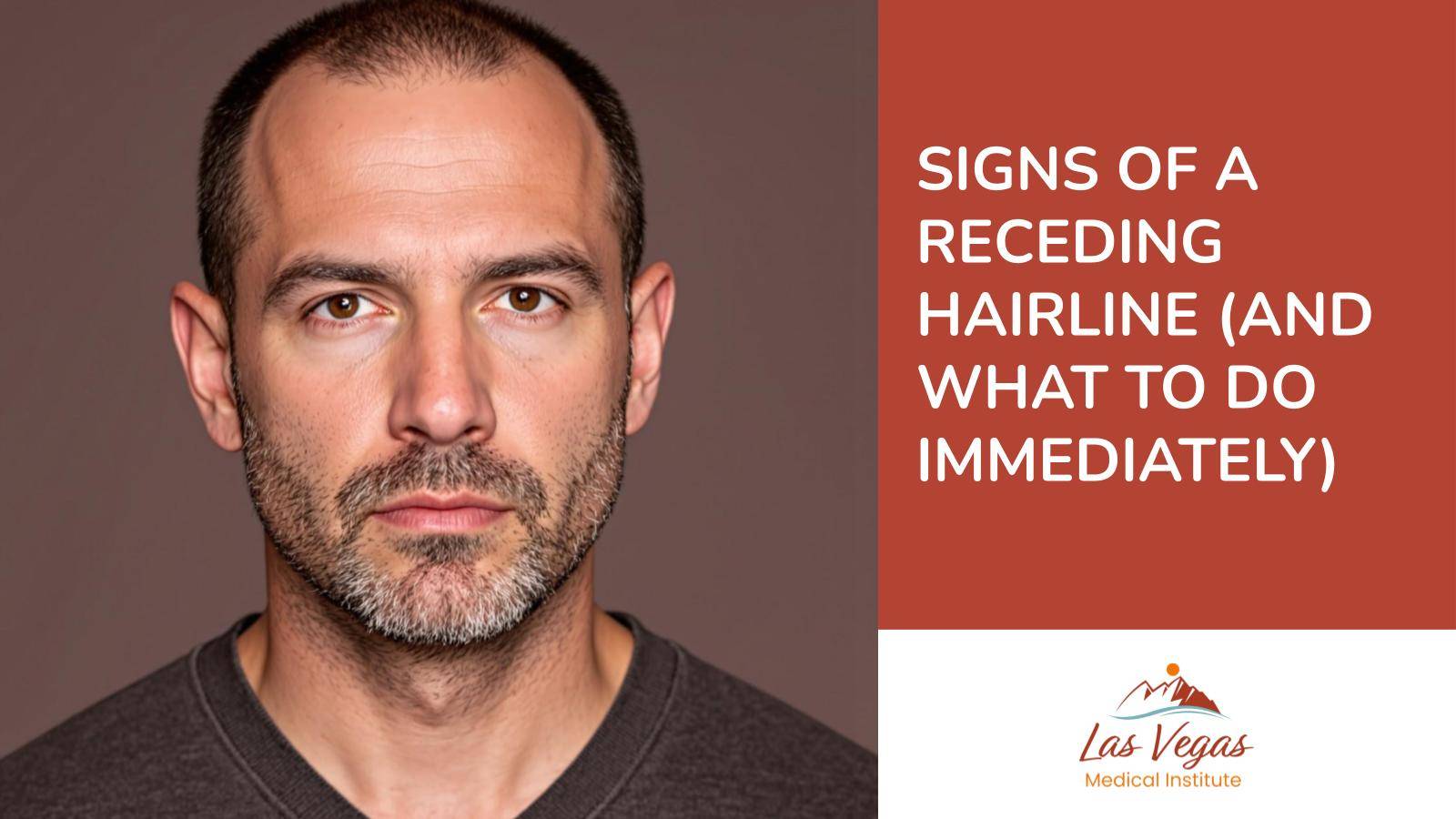
The clearest signs of a receding hairline include temple thinning, a gradually higher frontal hairline, and increased scalp visibility near the forehead. While these changes usually develop slowly, recognizing them early makes a meaningful difference in treatment options and long-term hair health. When addressed at the first signs, many forms of hair loss respond well to medical and regenerative therapies designed to protect existing follicles and support regrowth.
Most people first notice mild thinning at the temples, an uneven hairline, or extra hair shedding in the shower. Over time, the frontal hairline may shift back 1–2 centimeters, forming an M-shaped pattern in many men or a wider part in many women. The encouraging news is that early thinning often occurs while follicles remain active, making treatments such as medical hair therapy and platelet-rich plasma (PRP) particularly effective at strengthening hair, improving density, and slowing further recession.
Key Takeaways of Signs of A Receding Hairline
The earliest signs of receding hairline include temple thinning, a slightly higher frontal hairline, and more scalp showing under bright light or in photos.
A normal or mature hairline may move up slightly in early adulthood and then stabilize, while a true receding hairline keeps thinning and retreating over the years.
In men, a receding hairline often forms a deepening M-shaped pattern, while women tend to see thinning around the part and frontal hairline rather than complete front-edge loss.
Increased shedding, finer and softer strands at the front, and symptoms like itching or burning along the hairline can signal underlying pattern hair loss or scalp conditions that need attention.
Anyone with early signs of receding hairline specially with a family history of hair loss should see a dermatologist promptly to identify the cause and start treatments that can slow thinning and support regrowth.
What A Normal Hairline Looks Like
A healthy hairline has a consistent shape, good hair density, and no active areas of unusual hair thinning or patchy hair loss.
Common Adult Hairline Shapes
A normal adult hairline usually sits about two to three finger widths above the eyebrows. It can be straight, slightly rounded, or form a gentle M-shape without deep temple thinning.
Some people naturally have an M shaped hairline from their late teens or early twenties. That alone is not always a sign of receding hairline, especially if it stays stable over years. A healthy hairline, even when M-shaped, keeps similar thickness across the frontal hairline without obvious gaps or bald spots.
Other common shapes include a straight-across hairline or one with a mild widow's peak. The key is that the frontal hairline edge feels consistent when touched, and hair follicles are packed closely enough that the scalp is not clearly visible in normal lighting. Small irregularities and an uneven hairline at the corners can be completely normal.
How Hairlines Naturally Change With Age
As people age, the hairline can mature slightly without turning into male pattern baldness or female pattern hair loss. This natural shift is called a mature hairline.
During the late teens or twenties, the frontal hairline may move up a small amount, typically less than a centimeter, then stop. Hair density remains good, and the temples do not keep creeping back year after year. This change reflects aging and hormones, not always a problem.
With age, some gradual thinning can occur across the whole scalp, especially after hormonal changes like menopause. Hair may look a bit finer, but the overall shape of the hairline remains familiar. Recognizing this difference is key when comparing normal aging to early pattern hair loss driven by the hormone called dihydrotestosterone, or DHT.
Early Visual Signs Of A Receding Hairline
When hairline recession starts, the earliest clues are usually visual: small position changes, local thinning hair, and more scalp showing at the front or temples.
Subtle Changes In Hairline Position
One of the first early signs is a shift in where the frontal hairline meets the forehead. The line may creep back one to two centimeters over several years.
People often notice this in old photographs. The hairline that once sat just above the forehead now appears higher. This slow, gradual thinning can be easy to miss day to day. When the hairline is receding, it tends to move back more at the temples than at the center, creating early pattern baldness shapes.
Thinning Around The Temples And Corners
Temple thinning is one of the clearest early signs of receding hairline in male pattern hair loss. The hair at the corners becomes finer, shorter, and less dense.
Instead of a solid line, the frontal hairline at the temples looks feathered. The transition from hair to bare forehead is less defined. Some hairs there miniaturize, meaning each new hair growth cycle produces thinner strands. Over time, miniaturized hair may stop growing altogether.
Increased Scalp Visibility And Widening Gaps
Another early clue is increased scalp visibility under bright light or in photos. The spaces between strands widen so the skin shows more clearly.
People might notice a wider natural part at the front, or sections where the scalp reflects light in a way it did not before. This can happen even before obvious bald spots appear. In pattern hair loss, hair loss occurs gradually, but subtle thinning around the frontal hairline can progress every year if untreated.
Physical And Sensory Changes You May Notice
Beyond the mirror test, the body offers physical signals that something is changing with hair health and hair density.
More Hair Shedding Than Usual
A noticeable increase in hair shedding is often one of the earliest alarms. Finding extra strands on the pillow, comb, or shower drain can feel unsettling.
Shedding up to about 100 hairs a day is considered normal for most people. When hair loss occurs in higher amounts for weeks, especially from the frontal hairline, it may signal early pattern hair loss. Increased hair shedding combined with temple thinning is more concerning than shedding alone.
Changes In Hair Texture And Strand Thickness
People with androgenetic alopecia often notice hair strands becoming thinner and softer at the front. This miniaturization is a hallmark of male pattern baldness and female pattern thinning.
The same number of hairs may be present at first, but each one has less volume. Styling becomes harder. The hair no longer covers the scalp as fully, and the frontal hairline looks less sharp. These texture changes usually appear before complete loss of follicles.
Itching, Irritation, Or Tightness Around The Hairline
Some people with a receding hairline report itching, burning, or a sensation of tightness along the scalp margin. These symptoms do not appear in everyone but deserve attention.
Mild irritation can come from dandruff, scalp infections, or seborrheic dermatitis, which can worsen hair thinning if untreated. In conditions like frontal fibrosing alopecia or some forms of alopecia areata, inflammation may cause discomfort as hairline recession progresses.
Any persistent itching or redness near the frontal hairline, especially when combined with early signs of receding hairline, should prompt a visit to a dermatologist. Early diagnosis allows targeted treatment options before scarring or permanent damage occurs.
Patterns Of Receding Hairlines In Men And Women
Receding hairlines follow recognizable patterns that differ between men and women, often linked to androgenetic alopecia and hormonal changes.
Typical Male Receding Patterns (M-Shape And Beyond)
In men, male pattern hair loss usually starts at the temples and sometimes at the crown. The frontal hairline pulls back, forming a pronounced M shaped pattern.
Over time, the M deepens. The central strip of hair at the front can shrink, and bald spots can appear on the crown. These changes are graded on the Norwood scale, which helps clinicians track progression and plan treatment. Without intervention, the M-shape may advance to extensive pattern baldness.
The driving force is often genetic hair loss combined with DHT-sensitive follicles. DHT binds to receptors in the follicles at the temples and crown, shortening the growth cycle. Professional treatment can reduce DHT levels, promote hair growth, and sometimes achieve hairline restoration.
Typical Female Thinning Patterns Around The Hairline
Women rarely lose the entire frontal hairline the way many men do, but they commonly experience hair thinning around the front and part line.
Female pattern hair loss often shows as gradual thinning at the central part, with increased scalp visibility. After menopause, shifting estrogen levels and relative increases in androgens can accelerate this process. Some women also notice temple thinning, especially if they use tight hairstyles or have hormonal imbalances.
Unlike male patterns, women usually keep a fringe of hair along the frontal hairline, but the density drops. Many women describe their ponytail feeling smaller or their bangs no longer covering the forehead as well. Recognizing these signs early allows a dermatologist to create a treatment plan before severe hairline recession develops.
How To Tell Receding From Other Types Of Hair Loss
Not all hair thinning at the front means true hairline recession. Distinguishing between conditions helps guide the right treatment options.
Receding Hairline vs. Mature Hairline
A mature hairline is a normal age-related shift, while a receding hairline reflects ongoing pattern hair loss. The difference lies in progression and density.
With a mature hairline, the frontal edge moves slightly higher in late teens or early twenties, then stabilizes. Hair density stays strong, and temple areas do not keep thinning. The change usually stops by the early thirties.
With a true receding hairline, the shift continues over years. The temples hollow out, the M-shape deepens, and subtle thinning turns into visible gaps. Comparing current photos with those from three to five years earlier can make this clearer.
Receding Hairline vs. Diffuse Thinning
Diffuse thinning affects the entire scalp rather evenly, while hairline recession targets the frontal region and temples first.
In diffuse hair thinning, the natural part widens, and hair looks less dense everywhere, including the sides and back. The frontal hairline shape may remain mostly the same. This pattern can result from nutritional issues, thyroid disease, or certain medications such as some used for high blood pressure.
A receding hairline, by contrast, shows localized loss at the front. The forehead appears taller, and scalp visibility is greatest at the frontal edge. Dermatologists look at these patterns, along with detailed history, to determine whether androgenetic alopecia, telogen effluvium, or another cause is driving the change.
Receding Hairline vs. Stress-Related Shedding
Stress-related shedding, often called telogen effluvium, usually causes a temporary surge in hair fall without a clear patterned recession.
People notice sudden increased shedding several months after a major stressor, illness, or surgery. Hairs come out easily all over the scalp. The hairline shape usually stays the same, even though volume drops.
With a receding hairline, shedding may not feel as dramatic day to day, but the frontal hairline steadily retreats or thins. If stress shedding unmasked underlying androgenetic alopecia, the hairline may not fully recover. That is when a professional assessment is especially important.
Risk Factors And Causes Behind A Receding Hairline
When a hairline recedes, multiple factors usually intersect, including genetics, hormones, lifestyle, and underlying medical conditions.
Genetics And Hormones
The most common cause of a receding hairline is androgenetic alopecia, also called pattern hair loss. This involves a strong genetic predisposition and sensitivity to androgens.
In people with this condition, hair follicles in specific regions respond poorly to DHT, a hormone derived from testosterone. DHT shortens the growth phase of hair, producing gradual thinning and miniaturization. Over many cycles, the follicles may stop producing visible hair.
Both male pattern baldness and female pattern hair loss follow this mechanism, though the patterns differ. Family history of early hairline recession or bald spots strongly raises risk. Managing DHT levels with approved medical treatments can slow or partly reverse early changes for some patients.
Lifestyle, Stress, And Hairstyle Habits
Lifestyle factors can worsen existing genetic hair loss. Chronic stress, poor sleep, and nutrient-poor diets can all contribute to increased shedding and reduced hair density.
Tight hairstyles that pull back the frontal hairline, such as tight braids or severe ponytails, may cause traction alopecia. Over time, repeated tension damages follicles along the hairline, especially at the temples. This can mimic or add to hairline recession. Reducing stress and choosing looser styles can help protect a healthy hairline.
Smoking, rapid weight loss, and certain medications may also influence hair health. While these may not cause a receding hairline alone, they can trigger more aggressive thinning in someone already vulnerable to androgenic alopecia.
Underlying Health Or Scalp Conditions
Several medical conditions can cause or worsen hairline changes. Thyroid disorders, iron deficiency, and some autoimmune diseases may lead to increased hair shedding and thinning.
Specific scalp conditions such as frontal fibrosing alopecia, alopecia areata, and scarring alopecias can directly affect the frontal hairline. In these cases, inflammation can damage follicles and lead to permanent loss if untreated. Symptoms may include redness, scaling, or patches of smooth bare skin.
Scalp infections or chronic dermatitis can also impair hair health. Early evaluation by a dermatologist helps distinguish these from typical pattern baldness and guides appropriate medical treatments to protect remaining follicles and, when possible, promote hair regrowth.
Frequently Asked Questions About Signs of A Receding Hairline (And What to Do Immediately)
What are the first signs of a receding hairline I should look for?
Early signs of a receding hairline include thinning at the temples, a gradually higher frontal hairline, and more scalp showing near the forehead under bright light. You may also notice extra hairs in the shower drain, an uneven hairline, or subtle gaps where the scalp becomes more visible in photos.
How can I tell the difference between a mature hairline and a receding hairline?
A mature hairline moves up slightly in the late teens or twenties, usually less than a centimeter, then stabilizes, with density staying good and temples not steadily thinning. A true receding hairline keeps creeping back over years, creating deeper temple recession, an M-shape, and widening gaps where the scalp shows through.
Are itching and burning around the hairline a sign of receding hairline?
Itching, burning, or tightness around the hairline can accompany a receding hairline, especially when scalp conditions or inflammatory hair loss are present. While not everyone with hairline recession has these symptoms, persistent irritation or redness with visible thinning should be checked by a hair specialist to rule out scarring or inflammatory alopecias.
Can a receding hairline grow back, and what treatments help?
Some early receding hairlines can partially improve with timely treatment. Hair specialist may use topical or oral medications that reduce DHT, stimulate hair growth, or increase scalp blood flow, along with PRP therapy or, in some cases, hair transplant surgery. Results vary, but acting at the first signs of receding hairline offers the best chance of regrowth.
Conclusion and Summary of Signs of A Receding Hairline (And What to Do Immediately)
Recognizing the early signs of receding hairline allows people to act while many follicles are still capable of new hair growth. Subtle temple thinning, a slowly higher frontal hairline, increased scalp visibility, and changes in texture together suggest more than just a mature hairline. For anyone noticing these shifts, especially with a family history of androgenetic alopecia, a timely consultation with a hair specialist can clarify the cause and open the door to effective treatment options.
With the right combination of medical therapies, lifestyle adjustments, and ongoing monitoring, many people can slow further hair loss, protect a healthy hairline, and, in some cases, regrow hair in thinning areas. The key is not waiting until the changes feel obvious and overwhelming: early attention offers the best chance for lasting hair restoration and confidence.
Ready to Restore Your Hair with Non-Surgical Hair Restoration in Las Vegas?
Thicker Hair. Natural Regrowth. No Downtime.
Unlike hair transplants that require invasive surgery, scarring, and weeks of recovery, our advanced platelet-rich plasma PRP hair restoration uses your body's own healing platelets to naturally stimulate hair follicles and regrow your hair. It's like waking up dormant follicles and giving them the growth factors they need to thrive again.
This isn't hiding under toupees or settling for temporary hair replacement systems. Our medical-grade hair restoration without surgery delivers concentrated growth factors directly into your scalp, targeting the root cause of thinning and triggering natural regrowth where you need it most.
Are You Experiencing These Common Hair Loss Problems?
Receding hairline that keeps moving back.
Thinning crown that’s becoming more visible.
Bald spots that won’t fill in.
Male pattern baldness affecting your confidence.
Female pattern baldness that’s getting worse.
Patchy hair loss in multiple areas.
Frontal hairline thinning and recession.
Sudden hair loss that appeared out of nowhere.
Experience Benefits You Can Actually FEEL:
Natural hair regrowth without surgery or scars.
Thicker, fuller hair that’s actually yours.
No more hiding under toupees or wigs.
Effective non-surgical hair restoration for men and women.
Minimally invasive with no downtime.
Safe, natural solution using your own blood platelets.
Real hair replacement from your own follicles.
And much more!
Why settle for temporary cover-ups or invasive transplants when you can regrow your own hair naturally? PRP hair restoration is trusted by men and women worldwide who've experienced real regrowth in areas they thought were gone forever. Many patients see visible improvements within months, with continued thickening over time.
At Las Vegas Medical Institute, we blend advanced PRP hair restoration technology with physician-led expertise for hair restoration results that restores your hair, appearance, and your confidence.
Ready to regrow your hair naturally? Schedule Your Hair Restoration Consultation here, or call us today at (702) 577-3174 and discover how non-surgical hair restoration is helping men and women across Las Vegas reclaim their full, healthy hair!
Cover Photo Illustration by: By Las Vegas Medical Institute.
Morpheus8 before and after treatment photos typically show firmer skin, softer wrinkles, and more defined contours because the procedure triggers deep collagen remodeling over time. In clinical practice, most patients see subtle tightening within a few weeks and more dramatic changes in 3–6 months, especially on the face, neck, and areas with skin laxity. The…
What is Morpheus8 treatment? It is a minimally invasive treatment that combines microneedling with radiofrequency energy to tighten skin, remodel tissue, and improve texture. In one appointment at a medical office or med spa, ultra-fine needles create tiny punctures while RF energy heats deeper layers, stimulating collagen production and the body's natural healing process.This dual…
PRF vs PRP hair restoration are two advanced regenerative treatments that use a person's own blood to stimulate hair growth and improve hair density. Both platelet rich plasma (PRP) and platelet rich fibrin (PRF) deliver concentrated platelets and growth factors into the scalp, helping awaken dormant hair follicles and slow ongoing hair loss. The key…
Does PRP hair restoration work? In many patients with early-to-moderate thinning, platelet rich plasma (PRP) therapy can significantly increase hair density, improve hair thickness, and reduce shedding. It does this by using growth factors from the patient's own blood to stimulate hair follicles, prolong the growth phase, and stimulate hair growth in medically supervised office…