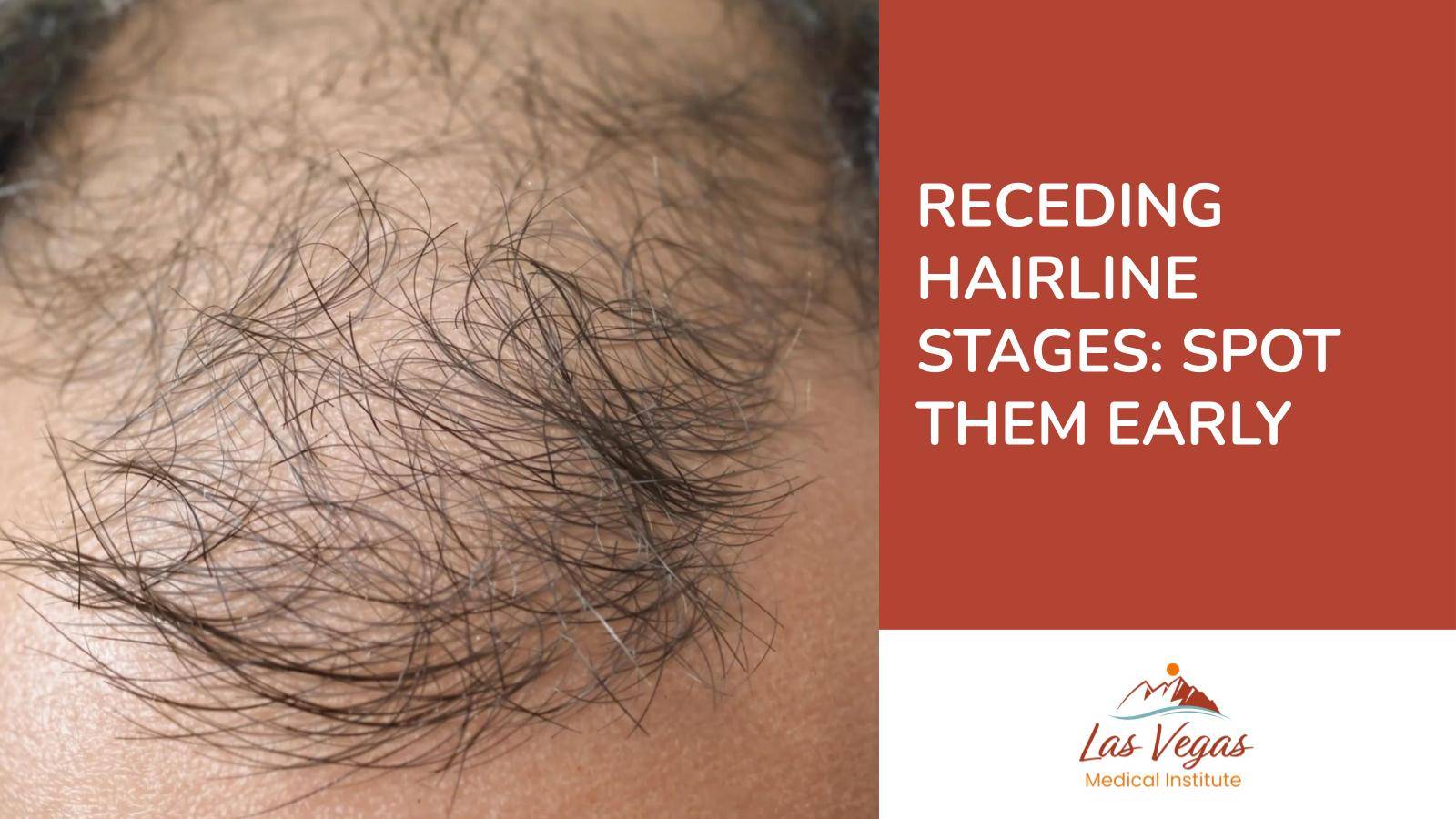
Receding hairline stages describe how a hairline gradually moves back from the temples and forehead, often following predictable patterns seen in male pattern baldness. In most people, these stages are driven by androgenetic alopecia, where genetically sensitive hair follicles slowly shrink and produce finer, shorter hairs. The key to slowing hair loss is recognizing which stage someone is in early and getting appropriate treatment before significant hair loss occurs.
Receding hairline stages follow the Norwood scale, progressing from a normal juvenile hairline to advanced baldness.
In the earliest stages (Stage 1–2), focusing on protecting existing hair with medical treatments and gentle hair care can slow hair loss and sometimes stimulate regrowth.
Stage 3 and Stage 3 Vertex mark clinically significant hairline recession and crown thinning, where consistent, evidence-based treatments like medications and PRP can help preserve and potentially thicken remaining hair.
In middle to advanced receding hairline stages (Stage 4–7), treatment often combines ongoing medical therapy with procedures such as hair transplant surgery and in-office laser therapy to restore coverage and density.
Healthy lifestyle habits, including a nutrient-rich diet, stress management, and avoiding tight hairstyles or harsh chemicals, support any medical plan and help maintain a natural-looking hairline over time.
What A Receding Hairline Actually Is
A receding hairline is the earliest visible sign of androgenetic alopecia, also called male pattern hair loss, where hairline recession usually starts at the temples.
In androgenetic alopecia, hair follicles become sensitive to the hormone DHT. Over time, these shrinking hair follicles produce thinner, shorter hairs, then eventually stop producing new hair growth. This process affects overall hair density and creates familiar pattern baldness, including an M‑shaped hairline or a bald spot on the crown.
A receding hairline depends strongly on genetics and family history. If parents or grandparents lost hair in similar ways, there is a higher chance of following the same hair loss patterns. Hormonal imbalances and chronic stress can also contribute to hair loss and speed up the transition between different receding hairline stages.
The Main Receding Hairline Stages (Using The Norwood Scale)
The Norwood scale describes the main stages of a receding hairline and crown thinning, from a full juvenile hairline to being almost completely bald.
Stage 1: Normal Juvenile Hairline
In Stage 1, there is no significant hairline recession and hair density is usually even from front to crown. This is sometimes called the juvenile hairline because it often mirrors childhood hairline position.
Hair follicles at this stage show normal hair growth cycles, with no obvious hair thinning or pattern hair loss. Shedding may occur, but the hair remaining regrows at a healthy rate and maintains coverage across the scalp.
People with a Stage 1 hairline sometimes worry after noticing hair fall in the shower or on a pillow. On its own, shedding is not proof of a receding hairline start.
Stage 2: Early Receding At The Temples
Stage 2 marks the first visible hairline recession at the temples, but it often represents a mature hairline rather than true male pattern baldness. The hairline moves slightly higher, forming a subtle U‑shape.
At this point, there may be mild hair thinning around the temples, yet no significant hair loss elsewhere. Many people remain in Stage 2 for years without progressing to later receding hairline stages.
A doctor will look at family history, age, and any shrinking hair follicles to decide whether this is normal maturation or early pattern baldness. They may recommend gentle hair care, avoiding tight hairstyles like tight ponytails, and reducing excessive heat styling to maintain healthy hair.
Stage 3 is considered the first clinically significant stage of male pattern hair loss. There is considerable hairline recession at both temples, creating an obvious M, V, or U‑shaped pattern.
At this stage, hair density decreases at the front, and the hairline stages become easier to document using photos. People may see more scalp showing through when styling their hair, especially with shorter cuts.
Because Stage 3 reflects more advanced hair loss, dermatologists often recommend active hair loss treatments. Options include prescription medications to reduce further hair loss, topical solutions designed to promote hair growth, and sometimes platelet rich plasma therapy to encourage hair growth in weakened areas.
If someone hopes to see a receding hairline grow back partially, Stage 3 is often the turning point. Many patients can preserve existing hair and sometimes gain new hair growth, but results depend on how many hair follicles remain alive and responsive.
Stage 3 Vertex And Beyond: Advanced Thinning At The Crown
Stage 3 Vertex describes hair thinning that affects the crown, creating a noticeable bald spot while the frontal recession may still resemble Stage 2 or Stage 3. This pattern highlights the importance of checking both hairline and crown.
From Stage 4 onward, the receding hairline stages show larger areas of hair loss. Stage 4 features severe frontal loss and a distinct bald spot on the crown, separated by a band of hair. Stage 5 shows these bald areas expanding and the separating band becoming narrower.
In Stage 6, the front and crown bald spots merge, leaving hair mainly on the sides. Stage 7 is the most advanced, with hair remaining only in a horseshoe fringe around the sides and back, where sufficient donor hair may still exist for hair transplant surgery.
In middle and advanced stages, treatment goals often shift from only slowing further hair loss to planning long‑term restoration. Many patients discuss hair transplant options, laser therapy performed in a clinic, or other hair loss treatments as part of a comprehensive plan. Even when someone seems almost completely bald on top, a specialist will evaluate any existing hair for transplant planning. They also consider how to maintain healthy hair growth in the donor areas long term.
How To Tell Which Stage You Are In
Identifying receding hairline stages accurately usually requires comparing one's hairline and crown to Norwood scale images and having a professional scalp evaluation. In a medical office, a hair specialist examines the pattern of hair thinning, checks for a bald spot at the crown, and measures hair density. They may use magnification to look for miniaturized hairs that indicate androgenetic alopecia.
They also review medical history, medications, hormonal factors, and family history that could contribute to hair loss. This helps distinguish male pattern baldness or female pattern hair loss from other causes like scarring conditions or nutritional deficiencies.
Progression through the stages of a receding hairline depends on genetics and individual biology. Some people move quickly from Stage 2 to Stage 4, while others stay stable for many years. Because early intervention offers more appropriate treatment options, many specialists recommend seeking evaluation as soon as someone notices hairline receding or crown thinning on photos or in the mirror.
Treatment Options By Stage
Treatment options for a receding hairline depend on the specific stage, overall hair health, and how much hair remaining can realistically be preserved.
Hair Treatment for Early Stages
In early stages, such as Stage 1 and Stage 2, doctors often focus on protecting existing hair. They may prescribe medications that target male pattern baldness, aiming to slow down hair loss and stabilize the hair growth cycle. Topical solutions used under medical guidance can also stimulate hair growth in miniaturized follicles.
Hair Treatment at Stage 3
At Stage 3 and early Stage 3 Vertex, medical treatments usually remain the first line. Many clinics combine medications with platelet rich plasma PRP injections, which use a patient's own platelet rich plasma to stimulate hair growth and promote regrowth in thinning zones.
Hair Loss Treatment at Stage 4 and 5
For middle stages like Stage 4 and Stage 5, medical hair loss treatments are often paired with procedural options. In‑office laser therapy may help maintain healthy hair growth in remaining follicles. Some patients also begin planning future hair transplant surgery while continuing other hair loss treatments to protect non‑transplanted hair.
Hair Loss Treatment for Advanced Stages
In advanced stages, especially Stage 6 and Stage 7, transplant procedures become the main way to restore coverage to bald areas. Surgeons evaluate whether there is sufficient donor hair on the sides and back to create a natural hairline without exhausting donor reserves.
Throughout all stages, a specialist will emphasize realistic expectations. Medical treatments can often preserve existing hair and sometimes thicken thinning hair, but they cannot revive follicles that are completely lost.
Lifestyle And Haircare Habits That Support A Healthy Hairline
Lifestyle and daily hair care habits cannot change genetics, but they can support overall hair health and sometimes reduce additional stress on vulnerable follicles.
A balanced diet that includes enough protein, iron, zinc, and vitamins supports healthy hair growth and the normal hair growth cycle. Many clinicians also highlight a healthy lifestyle overall, including exercise and good sleep, to reduce chronic stress that may contribute to hair loss.
Gentle hair care is particularly important for people already dealing with hair thinning. That means avoiding tight ponytails or other tight hairstyles that tug on the hairline. It also includes limiting excessive heat styling, choosing mild shampoos instead of harsh hair loss shampoos with strong detergents, and avoiding harsh chemicals when possible.
People are often advised to use proper hair care techniques, such as gentle towel drying and avoiding aggressive brushing on wet hair. These steps help maintain healthy hair and protect existing hair from unnecessary breakage.
While lifestyle changes alone will not reverse androgenetic alopecia, they work alongside medical treatments to support overall hair health. This combination approach can help patients get the best possible results from any chosen treatment options.
When To See A Professional About A Receding Hairline
Seeing a professional early in the receding hairline stages often makes the biggest difference in long‑term outcomes. Most experts suggest scheduling an appointment once someone notices persistent hairline recession, increasing hair thinning at the crown, or a visible bald spot that seems to expand. Stage 2 with a strong family history, or definite Stage 3 changes, are common points for evaluation.
During an office visit, the dermatologist confirms whether someone has androgenetic alopecia or another condition. They then recommend appropriate treatment options tailored to the specific stage and the patient's goals. People should also seek help quickly if they notice sudden, patchy, or scarring hair loss. Those patterns are not typical male pattern hair loss and require prompt medical attention.
Early diagnosis allows more time to preserve existing hair, plan any future hair transplant procedures, and build a realistic strategy to manage further hair loss over the coming years.
Frequently Asked Questions About Receding Hairline Stages: Spot Them Early
What are the main receding hairline stages on the Norwood scale?
The Norwood scale describes receding hairline stages from a full juvenile hairline (Stage 1) to extensive baldness (Stage 7). Early stages show mild temple recession, mid stages combine frontal loss with a crown bald spot, and advanced stages leave hair mainly in a horseshoe pattern around the sides and back.
Can a receding hairline grow back, and at which stages is this most likely?
A receding hairline is most likely to improve in early stages such as Stage 2 and Stage 3, when follicles are still alive but miniaturized. With consistent medical treatments and supportive hair care, many people can slow further loss and sometimes see thicker regrowth in weakened areas.
How can I tell which receding hairline stage I am in?
To identify your receding hairline stage, compare your hairline and crown to Norwood scale images and get a professional scalp exam. Hair specialists assess hair density, look for miniaturized hairs, review family and medical history, and distinguish androgenetic alopecia from other causes like scarring or nutritional deficiencies.
At what age do receding hairline stages typically start in men?
Receding hairline stages often begin in men during their late teens to early 30s, especially if they have a strong family history of androgenetic alopecia. Some only reach a mature hairline and stay stable for years, while others progress more quickly into clearly noticeable pattern hair loss.
What is the best way to slow a receding hairline besides medical treatments?
Beyond medical therapy, supporting a receding hairline involves gentle hair care, a balanced diet rich in protein, iron, zinc, and vitamins, and managing chronic stress. Avoid tight hairstyles, harsh chemicals, and excessive heat styling, and use mild shampoos to limit additional damage to already vulnerable hair follicles.
Conclusion and Summary of Receding Hairline Stages: Spot Them Early
Receding hairline stages provide a roadmap for understanding how pattern hair loss progresses, from the first subtle changes to advanced baldness. By recognizing whether someone is in Stage 1, 2, or beyond, they can seek timely medical advice, protect vulnerable hair follicles, and choose treatments matched to their situation. For many, that means combining medical hair loss treatments, procedures like platelet rich plasma or laser therapy, and good daily habits that encourage hair growth where follicles remain active.
No single approach fits everyone, and not every receding hairline will grow back fully. But with early assessment, a healthy lifestyle, and careful, gentle hair care, many people can slow down hair loss and maintain a natural‑looking hairline for longer.
Ready to Restore Your Hair with Non-Surgical Hair Restoration in Las Vegas?
Thicker Hair. Natural Regrowth. No Downtime.
Unlike hair transplants that require invasive surgery, scarring, and weeks of recovery, our advanced platelet-rich plasma PRP hair restoration uses your body's own healing platelets to naturally stimulate hair follicles and regrow your hair. It's like waking up dormant follicles and giving them the growth factors they need to thrive again.
This isn't hiding under toupees or settling for temporary hair replacement systems. Our medical-grade hair restoration without surgery delivers concentrated growth factors directly into your scalp, targeting the root cause of thinning and triggering natural regrowth where you need it most.
Are You Experiencing These Common Hair Loss Problems?
Receding hairline that keeps moving back.
Thinning crown that’s becoming more visible.
Bald spots that won’t fill in.
Male pattern baldness affecting your confidence.
Female pattern baldness that’s getting worse.
Patchy hair loss in multiple areas.
Frontal hairline thinning and recession.
Sudden hair loss that appeared out of nowhere.
Experience Benefits You Can Actually FEEL:
Natural hair regrowth without surgery or scars.
Thicker, fuller hair that’s actually yours.
No more hiding under toupees or wigs.
Effective non-surgical hair restoration for men and women.
Minimally invasive with no downtime.
Safe, natural solution using your own blood platelets.
Real hair replacement from your own follicles.
And much more!
Why settle for temporary cover-ups or invasive transplants when you can regrow your own hair naturally? PRP hair restoration is trusted by men and women worldwide who've experienced real regrowth in areas they thought were gone forever. Many patients see visible improvements within months, with continued thickening over time.
At Las Vegas Medical Institute, we blend advanced PRP hair restoration technology with physician-led expertise for hair restoration results that restores your hair, appearance, and your confidence.
Ready to regrow your hair naturally? Schedule Your Hair Restoration Consultation here, or call us today at (702) 577-3174 and discover how non-surgical hair restoration is helping men and women across Las Vegas reclaim their full, healthy hair!
Cover Photo Illustration by: By Las Vegas Medical Institute.
Morpheus8 before and after treatment photos typically show firmer skin, softer wrinkles, and more defined contours because the procedure triggers deep collagen remodeling over time. In clinical practice, most patients see subtle tightening within a few weeks and more dramatic changes in 3–6 months, especially on the face, neck, and areas with skin laxity. The…
What is Morpheus8 treatment? It is a minimally invasive treatment that combines microneedling with radiofrequency energy to tighten skin, remodel tissue, and improve texture. In one appointment at a medical office or med spa, ultra-fine needles create tiny punctures while RF energy heats deeper layers, stimulating collagen production and the body's natural healing process.This dual…
PRF vs PRP hair restoration are two advanced regenerative treatments that use a person's own blood to stimulate hair growth and improve hair density. Both platelet rich plasma (PRP) and platelet rich fibrin (PRF) deliver concentrated platelets and growth factors into the scalp, helping awaken dormant hair follicles and slow ongoing hair loss. The key…
Does PRP hair restoration work? In many patients with early-to-moderate thinning, platelet rich plasma (PRP) therapy can significantly increase hair density, improve hair thickness, and reduce shedding. It does this by using growth factors from the patient's own blood to stimulate hair follicles, prolong the growth phase, and stimulate hair growth in medically supervised office…