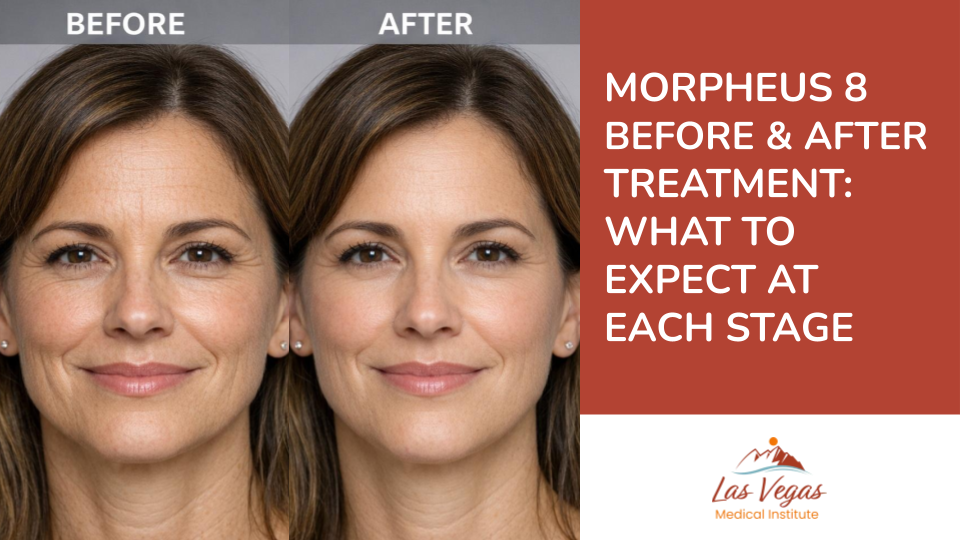
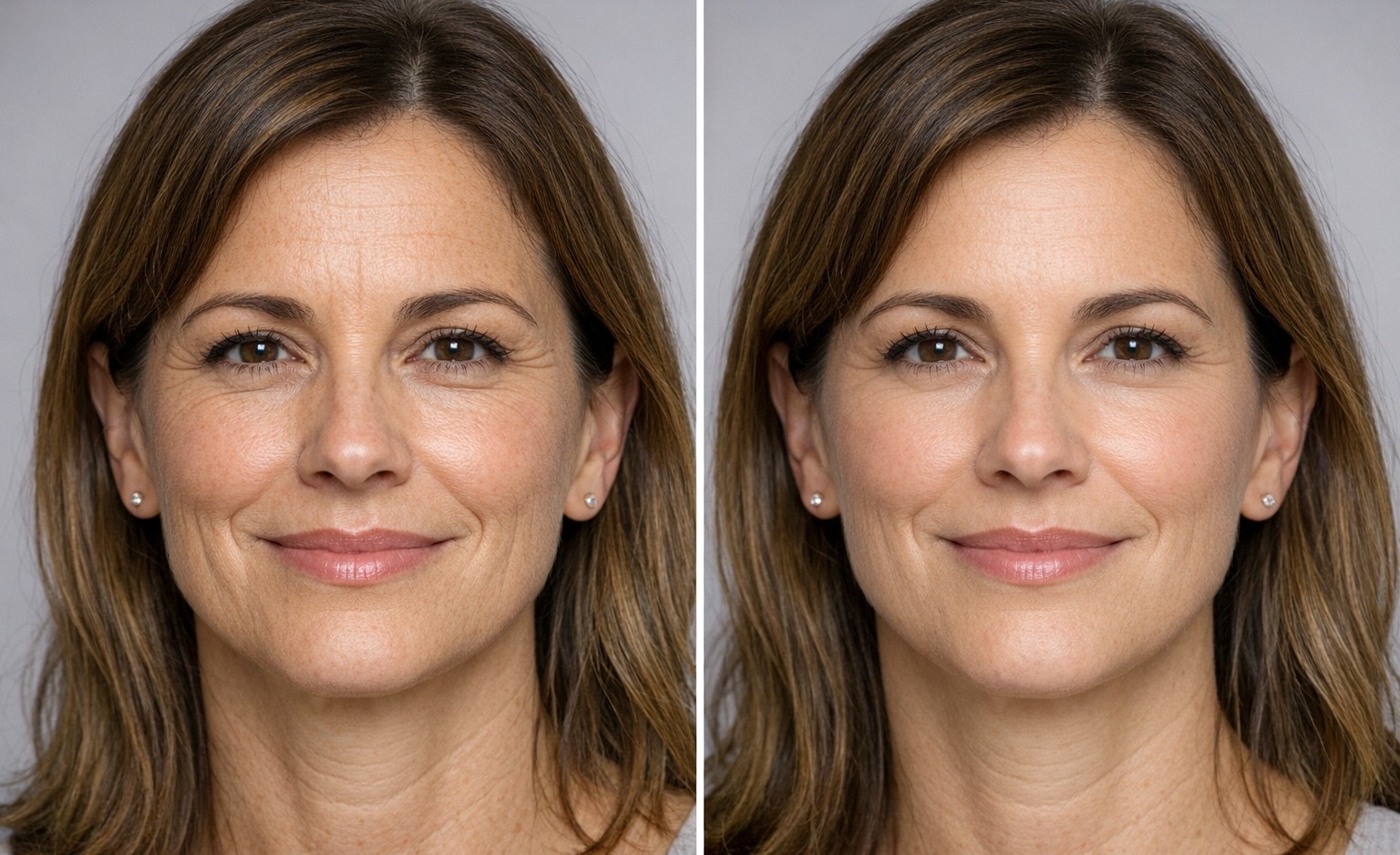
Morpheus8 before and after treatment photos typically show firmer skin, softer wrinkles, and more defined contours because the procedure triggers deep collagen remodeling over time. In clinical practice, most patients see subtle tightening within a few weeks and more dramatic changes in 3–6 months, especially on the face, neck, and areas with skin laxity. The key is understanding that individual results depend on age, skin tone, and how consistently someone follows pre‑ and post‑treatment instructions.
In practical terms, Morpheus 8 combines microneedling with radiofrequency to smooth wrinkles, refine texture, and improve mild sagging without surgery. People choose it to address jowls, neck laxity, acne scars, and even crepey skin above the knees. They want visible yet natural improvement, minimal downtime, and a treatment that works safely across different skin tones.
Key Takeaways of Morpheus8 Before & After Treatment
Morpheus8 before and after treatment photos typically show gradual tightening, smoother texture, and more defined contours that peak around 3–6 months after a series of 2–3 sessions.
The first 72 hours after Morpheus8 are marked by redness, swelling, and pinpoint marks that fade over several days.
Morpheus8 before and after treatment outcomes are best for mild to moderate wrinkles, acne scars, and early skin laxity, and should not be expected to replace surgical facelift results.
Long‑term maintenance with daily sunscreen, smart skincare, and optional yearly touch‑up sessions helps prolong Morpheus8 improvements.
Patients should use the consultation to discuss realistic outcomes, healing timelines, and their questions.
What Morpheus8 Is And How It Transforms Skin
Morpheus8 is an FDA‑cleared radiofrequency microneedling treatment that targets deeper layers of skin and tissue to tighten, smooth, and subtly lift.
How Morpheus8 Compares To Other Skin Tightening Options
Traditional microneedling uses tiny needles to create controlled injuries, which stimulate collagen. Morpheus8 adds radiofrequency energy through those needles, delivering heat into deeper layers for stronger tightening.
This dual approach helps remodel collagen and fat, so patients often notice improved jawline definition and reduced skin laxity under the chin and along the neck. Compared with many non‑RF microneedling systems, Morpheus8 can be adjusted to different depths, allowing customization for delicate under‑eye skin versus thicker areas like the lower face.
Who Is (And Is Not) A Good Candidate
Morpheus8 is best for adults who want firmer, smoother skin without surgery and who understand that improvement develops gradually over several months.
Perfect for Different Skin Tone & Skin Laxity
Compared with surface laser resurfacing, Morpheus8 focuses more on tightening and deep remodeling than on only polishing the top layer of skin. It can help with wrinkles, acne scars, enlarged pores, and rough texture. Because energy is delivered beneath the surface, many providers find it safer for a wider range of skin tones, including darker complexions that may be more prone to hyperpigmentation.
Good candidates typically have mild to moderate wrinkles, visible pores, or early sagging around the face or neck. Some also want to soften acne scars or textural irregularities on the cheeks or jawline. They are usually comfortable with a few days of redness and swelling but want to avoid the longer downtime of deeper resurfacing.
People who may not be good candidates include those with active skin infections, uncontrolled medical conditions, or very unrealistic expectations about their results. Someone expecting a full surgical facelift outcome from a non‑surgical procedure is likely to be disappointed.
Before Morpheus8: How To Prepare For Optimal Results
Preparation before Morpheus8 treatment helps reduce risks and supports smoother healing and stronger collagen stimulation.
Preparing Your Skin: Skincare, Sun, And Medications
Patients need to avoid tanning and heavy sun exposure for at least one to two weeks before the procedure. Sunburned or recently tanned skin can increase the chance of irritation and uneven pigmentation.
Patients are often advised to pause strong retinoids, exfoliating acids, or aggressive at‑home devices several days before treatment. A gentle cleanser, bland moisturizer, and strict sunscreen use usually form the basic skincare routine.
Providers also review medications and supplements. They may ask patients to avoid blood thinners, high‑dose fish oil, or certain herbal products temporarily, if medically appropriate, to minimize bruising. Any change to prescription drugs should only happen under the prescribing clinician's guidance.
Lifestyle Adjustments Before Treatment
Lifestyle choices can influence how skin responds. Adequate sleep, hydration, and a balanced diet support healing after any controlled injury to the skin.
Patients are often encouraged to limit alcohol and smoking before and after treatment, because both can impair circulation and collagen remodeling. Avoiding last‑minute tanning sessions or harsh peels helps keep the skin barrier intact.
Immediately After Morpheus8: The First 72 Hours
The first 72 hours after Morpheus8 are marked by visible redness and swelling that typically fade over several days.
Right After Your Session: Redness, Swelling, And Pinpoint Marks
Right after treatment, the skin often looks and feels like a sunburn. There may be noticeable swelling, especially along the cheeks, jawline, and neck. Tiny pinpoint marks from the needles may be visible up close.
This early phase is a normal response to controlled injury, not a sign of damage. Swelling and redness generally improve within one to five days, depending on the person's healing speed and treatment intensity.
Cold compresses and gentle elevation of the head can reduce swelling the first night. Rubbing or scratching the treated skin should be avoided because it may interfere with healing or cause irritation.
Morpheus8 Healing Timeline: Week‑By‑Week Results
Morpheus8 results build slowly as collagen remodels, so patients should watch for staged improvements rather than overnight transformation.
How Many Sessions You May Need For Noticeable Change
Most treatment plans include a series of two to three sessions, spaced about four to six weeks apart. Some people with deeper wrinkles or thicker acne scars may need more.
Patients often notice subtle tightening and smoother texture by about four weeks after their first session. These early changes can feel more obvious in person than in photos.
By three to six months after the final treatment, many see peak changes in firmness, contour, and overall skin quality. Jawlines may appear more defined, and mild jowling or neck laxity can soften.
Morpheus8 before and after photos taken along this timeline help patients see progress they might miss day to day. Individual results vary based on age, baseline collagen, medical history, and how carefully aftercare instructions were followed.
Realistic Before And After Outcomes You Can Expect
Realistic expectations are crucial. Morpheus8 refines, tightens, and smooths, but it does not create a different face or erase decades of aging.
Before And After For Different Concerns (Wrinkles, Acne Scars, Laxity)
For fine to moderate wrinkles, especially around the eyes, mouth, and lower face, patients frequently see softer lines and more supple skin. The result often looks like a fresher version of themselves rather than an obvious procedure.
Those with acne scars commonly notice more even texture and less shadowing in pitted areas, especially on the cheeks. Deep, ice‑pick scars may improve but rarely disappear completely.
For skin laxity on the lower face, jawline, or neck, Morpheus8 can reduce early sagging and refine contours. It is not meant to replace surgery when there is severe laxity, but it can offer meaningful improvement for mild to moderate concerns.
Providers usually show Morpheus8 before and after photos of real patients, including male and female examples and a variety of age groups and skin tones. Some offices display these photos on their website, grouped by concern or treated locations such as face, neck, or knees, so people can see what is realistic for them.
Risks, Side Effects, And How To Minimize Them
Like any medical procedure, Morpheus8 has potential side effects, though serious complications are rare when performed by trained professionals.
Signs Your Skin Is Healing Normally Versus When To Call Your Provider
Normal side effects include redness, swelling, and mild tenderness that improve steadily over several days. Slight bronzing or a sandpaper texture is common as the skin renews.
Small pinpoint marks or temporary dark dots can appear where the needles entered. These usually fade as the surface heals and pigment normalizes.
Patients should contact their provider if they notice rapidly worsening swelling, intense pain, spreading redness, or any sign of infection such as pus or fever. An unusual pattern of discoloration that does not match typical bruising also deserves prompt evaluation.
Frequently Asked Questions About Morpheus8 Before & After Treatment: What To Expect at Each Stage
What do typical Morpheus8 before and after results look like?
Morpheus8 before and after photos usually show firmer skin, softened fine lines, and more defined contours along the jawline and neck. Texture often appears smoother, pores look smaller, and mild jowling or laxity is reduced. Changes build gradually over 3–6 months as collagen remodels beneath the skin.
How long does it take to see Morpheus8 before and after changes?
Most patients notice subtle tightening and smoother texture about four weeks after the first session. Results continue to improve for three to six months after the final treatment as collagen rebuilds. Taking consistent before and after photos helps you track progress that may be easy to miss in daily mirrors.
How should I prepare before Morpheus8 treatment for the best results?
Before Morpheus8, avoid tanning and heavy sun exposure for one to two weeks, pause strong retinoids or exfoliating acids, and follow your provider’s guidance on medications. Focus on hydration, sleep, and not smoking. Arrive with clean skin, and complete any online medical forms or accessibility requests in advance.
What is the normal healing process after Morpheus8 treatment?
Right after Morpheus8, skin usually feels sunburned with redness, swelling, and tiny pinpoint marks. These signs typically fade within one to five days. The surface may feel slightly rough for about a week. Gentle skincare, cold compresses, and strict sun protection support healing and help prevent unwanted pigmentation changes.
How long do Morpheus8 results last, and do I need maintenance?
Morpheus8 before and after improvements in firmness and texture can last a year or longer, depending on age, lifestyle, and sun exposure. Many people schedule maintenance sessions once or twice a year. Daily sunscreen, not smoking, and a consistent skincare routine help preserve collagen gains between treatments.
Conclusion and Summary of Morpheus8 Before & After Treatment: What To Expect at Each Stage
Morpheus8 before and after treatment changes are rarely instant, but they can be substantial when patients choose an experienced provider and commit to the full plan.
Over several months, collagen remodeling can soften wrinkles, improve skin tone and texture, and reduce mild skin laxity on the face, neck, and select body areas. Patients who understand the normal healing timeline, recognize common signs of expected redness and swelling tend to report higher satisfaction.
Many practices now make it easier to start the process by posting morpheus 8 educational articles, and before and after photos on their website. Patients can review likely outcomes, then reach out through our contact form, phone call, or email to schedule a consultation.
Anyone considering Morpheus8 should use consultation time to ask direct questions, and explore realistic outcomes for their age and starting point. With clear communication and well‑planned treatment, the before and after journey can become a confident step toward healthier‑looking skin.
What is Morpheus8 treatment? It is a minimally invasive treatment that combines microneedling with radiofrequency energy to tighten skin, remodel tissue, and improve texture. In one appointment at a medical office or med spa, ultra-fine needles create tiny punctures while RF energy heats deeper layers, stimulating collagen production and the body's natural healing process.This dual…
PRF vs PRP hair restoration are two advanced regenerative treatments that use a person's own blood to stimulate hair growth and improve hair density. Both platelet rich plasma (PRP) and platelet rich fibrin (PRF) deliver concentrated platelets and growth factors into the scalp, helping awaken dormant hair follicles and slow ongoing hair loss. The key…
Does PRP hair restoration work? In many patients with early-to-moderate thinning, platelet rich plasma (PRP) therapy can significantly increase hair density, improve hair thickness, and reduce shedding. It does this by using growth factors from the patient's own blood to stimulate hair follicles, prolong the growth phase, and stimulate hair growth in medically supervised office…
Platelet-rich plasma (PRP) hair restoration before and after photos usually show thicker, denser hair, but the real change happens slowly over several months, not overnight. PRP hair restoration treatment uses platelet rich plasma from a patient's own blood to stimulate hair follicles, improve hair density, and reduce ongoing hair loss when used on the right…