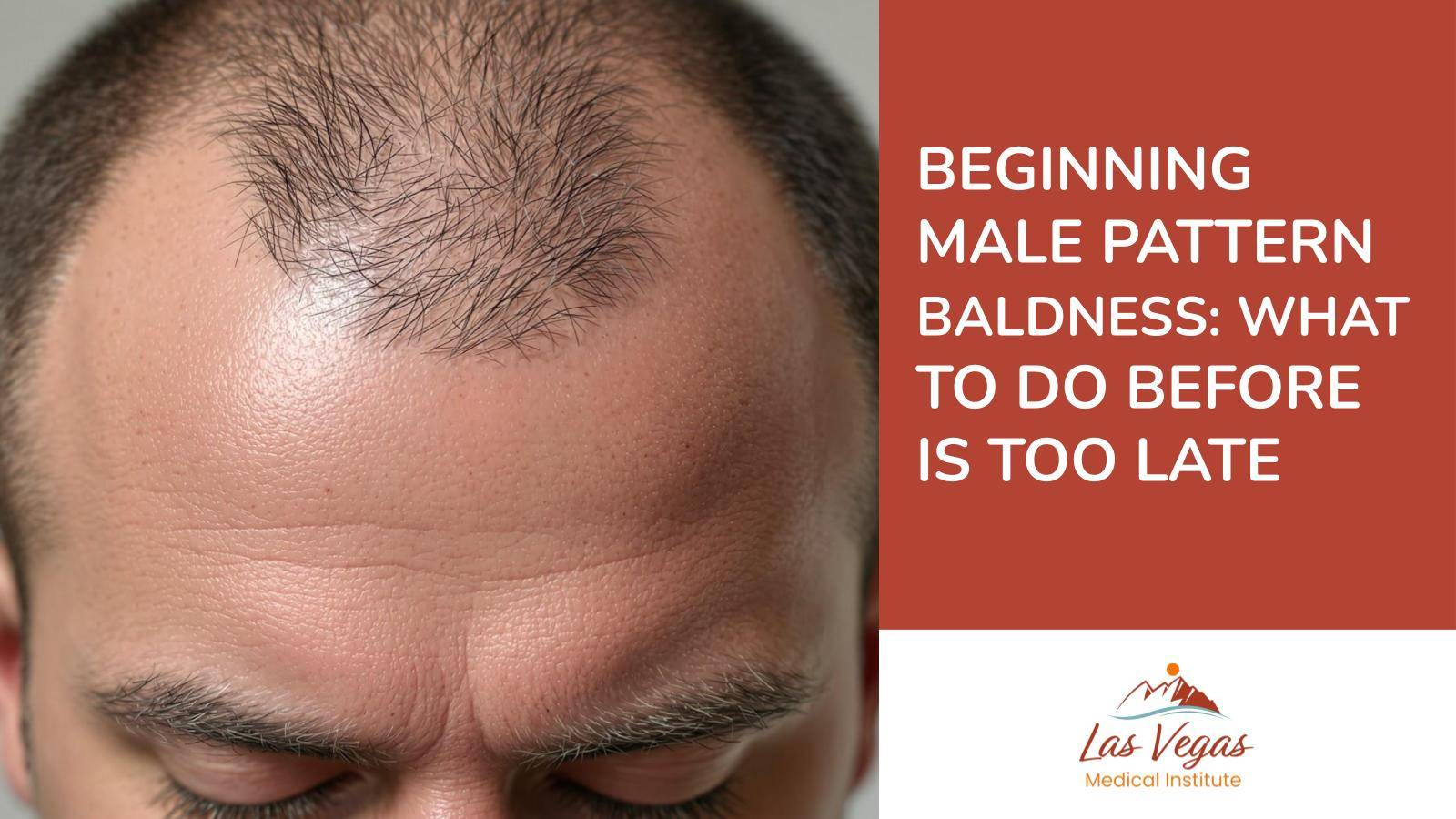
Beginning male pattern baldness is usually first noticed as a slowly receding hairline or subtle hair thinning at the crown, caused by hereditary sensitivity to male sex hormones called androgens. In androgenetic alopecia, hair follicles in specific scalp zones gradually shrink, the hair growth cycle shortens, and hairs become finer until noticeable hair loss appears. The key to limiting further hair loss and improving hair density is early intervention with proven medical treatments rather than waiting for partial or complete baldness.
In the early stages, men typically start balding in their late teens or early twenties with a hairline that gradually moves backward, diffuse thinning on top, or a small bald spot at the vertex. A dermatologist can diagnose male pattern hair loss, rule out conditions like alopecia areata or traction alopecia, and build a treatment plan that may include FDA‑approved medications, platelet rich plasma (PRP) in-office procedures, or other treatments to stimulate hair growth. Addressing chronic stress, underlying medical conditions such as insulin resistance or polycystic ovary syndrome in women, and environmental factors that accelerate hair loss can also support healthier hair.
Proven medical treatments form the foundation of managing beginning male pattern baldness by slowing DHT-driven miniaturization and supporting thicker regrowth.
Platelet-rich plasma (PRP) therapy can complement medications, while hair transplants are usually reserved until the pattern stabilizes.
Addressing stress, nutrition, and underlying health issues, helps support hair health and confidence while long-term treatment take effect.
What Male Pattern Baldness Actually Is
Male pattern baldness, medically called androgenetic alopecia, is a hereditary form of hair loss where hormones and genetics cause progressive thinning hair in a predictable pattern.
How Hair Grows And Why It Thins
To understand beginning male pattern baldness, it helps to know the basics of the hair growth cycle. Every scalp hair goes through a growth phase, a brief transition, and then a resting and shedding phase before a new hair begins. In healthy hair, the growth phase lasts several years, producing thick, pigmented strands that create normal hair density.
In male pattern baldness, susceptible hair follicles at the temples, mid‑frontal scalp, and crown respond abnormally to hormones called androgens, especially dihydrotestosterone (DHT). Over time, DHT shortens the growth phase and causes follicles to miniaturize. As follicles shrink, they produce shorter, finer, almost vellus‑like hairs, and the scalp starts to show through. People may notice hair thinning long before they see a defined bald spot.
Genetics, Hormones, And Other Risk Factors
Male pattern hair loss has a strong genetic component, and a family history of male or female pattern baldness on either side increases risk. It is not just the "mother's side" myth: genes from both parents influence how sensitive androgen receptors in hair follicles are to DHT. Men whose fathers or grandfathers had early male pattern baldness often notice signs sooner themselves.
Androgenic alopecia requires exposure to male sex hormones. Testosterone converts to DHT under the influence of an enzyme in hair follicles and the prostate. In genetically susceptible follicles, DHT shortens the growth phase and accelerates miniaturization, leading to a receding hairline or crown thinning. Higher follicular sensitivity, not just higher hormone levels, explains why some men keep thick hair even though similar androgen levels.
Other factors can worsen or unmask beginning stages of hair loss. Chronic stress, certain medical conditions such as thyroid disease, insulin resistance, or polycystic ovary syndrome in women, and significant weight loss can trigger rapid hair loss on top of an underlying pattern. Environmental factors and harsh hair practices, like frequent tight braids or traction alopecia from tension styles, may not cause male pattern baldness but can compound existing thinning hair.
Early Signs You Are Developing Male Pattern Baldness
At the beginning stages, male pattern baldness rarely shows up as sudden complete baldness. It usually starts with slow, subtle changes that are easy to miss or dismiss for years.
Typical Recession Patterns To Watch For
One of the earliest signs of male pattern baldness is a receding hairline at the temples. The hairline gradually moves backward, forming an "M" or "V" shape instead of a straight band of hair. Men often compare old photos and realize their forehead looks taller, even if friends have not noticed yet.
Another classic pattern is thinning hair at the crown, also called the vertex. People might first see a small bald spot in photos taken from behind or when someone points it out under bright lighting. Over time, this thinning area can expand and join with recession at the front, creating a larger area of pattern baldness across the top of the scalp.
Subtle Changes You Might Overlook
Not all early male pattern hair loss looks dramatic. Some people experience diffuse thinning across the top of the scalp rather than a sharp hairline recession. The hair looks less dense, styling feels harder, and more scalp becomes visible under bright light. Combing or styling may reveal wider spacing between hairs, even without a distinct bald spot.
Another subtle sign is increased daily shedding combined with slower regrowth in specific areas. Losing hair in the shower or on a brush is normal to a point, but when someone begins to notice hair loss beyond their usual amount, especially from the temples or crown, it is worth paying attention. The hairs themselves might feel finer and shorter, as miniaturized follicles cannot produce thick, healthy hair.
Treatment Options At The Beginning Stages
When male pattern baldness is caught early, there is a wider range of options to stabilize shedding, stimulate hair follicles, and maintain hair density for the long term.
Medications: How Finasteride And Minoxidil Work
Two FDA approved medications remain the backbone of medical treatments for male pattern hair loss. Finasteride is a prescription oral medication that reduces the conversion of testosterone to DHT. By lowering DHT levels around susceptible follicles, finasteride helps slow further hair loss and can allow some miniaturized follicles to produce thicker hairs again.
Most men use finasteride once daily under medical supervision, especially if they also have a family history of prostate cancer or other hormone‑sensitive conditions. While not every patient experiences dramatic regrowth, many maintain more hair and delay progression toward complete baldness. Consistency is critical, because stopping the medication usually allows androgen effects to resume.
Topical minoxidil works differently. It does not change hormones but appears to extend the growth phase and increase blood flow around follicles. Applied regularly to thinning areas, minoxidil can stimulate hair growth, improve hair density, and support healthy hair in miniaturized follicles. It is often combined with finasteride, since they target different aspects of the hair growth cycle.
Procedures And Devices: PRP, Lasers, And More
At the beginning stages, some people pursue in‑office procedures to complement medications. Platelet rich plasma therapy uses a person's own blood, processed to concentrate growth factors, which is then injected into areas of thinning hair. These growth factors may help stimulate hair follicles and support thicker regrowth in some patients.
Low level laser therapy delivered in a medical office setting is another non invasive treatment sometimes used for androgenetic alopecia. Controlled light wavelengths are directed at the scalp to encourage cellular activity and improve hair health. Evidence suggests that when combined with medications, it may help some individuals maintain more hair, although results vary.
Lifestyle Habits That Support Hair And Scalp Health
While lifestyle changes alone cannot fully treat male pattern baldness, they can support medical therapy and overall hair health. A balanced diet with adequate protein, iron, vitamin D, and other key nutrients provides the building blocks for healthy hair. People with restricted diets or digestive disorders may benefit from evaluation for deficiencies if they notice signs of hair loss.
Managing chronic stress through exercise, sleep, or stress management techniques may reduce shedding exacerbated by telogen effluvium on top of pattern baldness. Avoiding tight hairstyles that pull on hair, harsh chemical treatments, and excessive heat from curling irons can help prevent breakage that makes thinning look worse. Gentle scalp care and treating any dandruff or inflammation also create a better environment for new hair.
Frequently Asked Questions About Beginning Male Pattern Baldness: What to Do Before is Too Late
What are the first signs of beginning male pattern baldness?
Beginning male pattern baldness usually starts with a slowly receding hairline at the temples forming an “M” or “V” shape, or subtle thinning at the crown. You may notice a taller forehead, a small bald spot in photos, or diffuse thinning on top where more scalp shows under bright light.
How is beginning male pattern baldness diagnosed?
A dermatologist reviews your medical and family history, examines the pattern of hair loss, and may perform a pull test or use a dermatoscope to view follicles up close. They may order blood tests to rule out thyroid disease, iron deficiency, or other conditions before confirming androgenetic alopecia and suggesting treatment options.
What are the best early treatments for beginning male pattern baldness?
Evidence‑based treatments include finasteride, which lowers DHT around susceptible follicles, and topical minoxidil, which prolongs the growth phase and supports thicker hair. These are often combined with options like PRP injections or low‑level laser therapy. Starting treatment early, before extensive thinning, gives the best chance to stabilize loss and improve density.
Can I stop or reverse early male pattern baldness naturally without medication?
Healthy habits support overall hair health but typically cannot fully stop genetically driven male pattern baldness. For meaningful, lasting results, most people need medical treatments that directly address DHT effects and follicle miniaturization, guided by a hair specialist.
How long do PRP injections take to work for early male pattern hair loss?
For early male pattern hair loss, PRP injections usually begin to show subtle changes within 2 to 3 months, as hair shedding slows and existing hairs start to feel thicker. More visible improvement in hair density and texture is commonly noticed around 4 to 6 months, with continued gains as treatments progress. Results depend on consistency, the stage of hair loss, and whether PRP is combined with other hair-support treatments.
Conclusion and Summary of Beginning Male Pattern Baldness: What to Do Before is Too Late
Beginning male pattern baldness is common, genetically driven, and highly responsive to early, informed action. Recognizing early signs like a receding hairline, crown thinning, or diffuse loss on top gives people a window of opportunity to protect their hair.
By confirming the diagnosis with a specialist, considering medical treatments such as finasteride and minoxidil, and exploring supportive options like PRP therapy when appropriate, individuals can slow further hair loss and maintain meaningful hair density. Coupled with lifestyle habits that support scalp and hair health, offers the best chance to keep hair longer and feel in control of the process.
Ready to Restore Your Hair with Non-Surgical Hair Restoration in Las Vegas?
Thicker Hair. Natural Regrowth. No Downtime.
Unlike hair transplants that require invasive surgery, scarring, and weeks of recovery, our advanced platelet-rich plasma PRP hair restoration uses your body's own healing platelets to naturally stimulate hair follicles and regrow your hair. It's like waking up dormant follicles and giving them the growth factors they need to thrive again.
This isn't hiding under toupees or settling for temporary hair replacement systems. Our medical-grade hair restoration without surgery delivers concentrated growth factors directly into your scalp, targeting the root cause of thinning and triggering natural regrowth where you need it most.
Are You Experiencing These Common Hair Loss Problems?
Receding hairline that keeps moving back.
Thinning crown that’s becoming more visible.
Bald spots that won’t fill in.
Male pattern baldness affecting your confidence.
Female pattern baldness that’s getting worse.
Patchy hair loss in multiple areas.
Frontal hairline thinning and recession.
Sudden hair loss that appeared out of nowhere.
Experience Benefits You Can Actually FEEL:
Natural hair regrowth without surgery or scars.
Thicker, fuller hair that’s actually yours.
No more hiding under toupees or wigs.
Effective non-surgical hair restoration for men and women.
Minimally invasive with no downtime.
Safe, natural solution using your own blood platelets.
Real hair replacement from your own follicles.
And much more!
Why settle for temporary cover-ups or invasive transplants when you can regrow your own hair naturally? PRP hair restoration is trusted by men and women worldwide who've experienced real regrowth in areas they thought were gone forever. Many patients see visible improvements within months, with continued thickening over time.
At Las Vegas Medical Institute, we blend advanced PRP hair restoration technology with physician-led expertise for hair restoration results that restores your hair, appearance, and your confidence.
Ready to regrow your hair naturally? Schedule Your Hair Restoration Consultation here, or call us today at (702) 577-3174 and discover how non-surgical hair restoration is helping men and women across Las Vegas reclaim their full, healthy hair!
Cover Photo Illustration by: By Las Vegas Medical Institute.
Morpheus8 before and after treatment photos typically show firmer skin, softer wrinkles, and more defined contours because the procedure triggers deep collagen remodeling over time. In clinical practice, most patients see subtle tightening within a few weeks and more dramatic changes in 3–6 months, especially on the face, neck, and areas with skin laxity. The…
What is Morpheus8 treatment? It is a minimally invasive treatment that combines microneedling with radiofrequency energy to tighten skin, remodel tissue, and improve texture. In one appointment at a medical office or med spa, ultra-fine needles create tiny punctures while RF energy heats deeper layers, stimulating collagen production and the body's natural healing process.This dual…
PRF vs PRP hair restoration are two advanced regenerative treatments that use a person's own blood to stimulate hair growth and improve hair density. Both platelet rich plasma (PRP) and platelet rich fibrin (PRF) deliver concentrated platelets and growth factors into the scalp, helping awaken dormant hair follicles and slow ongoing hair loss. The key…
Does PRP hair restoration work? In many patients with early-to-moderate thinning, platelet rich plasma (PRP) therapy can significantly increase hair density, improve hair thickness, and reduce shedding. It does this by using growth factors from the patient's own blood to stimulate hair follicles, prolong the growth phase, and stimulate hair growth in medically supervised office…