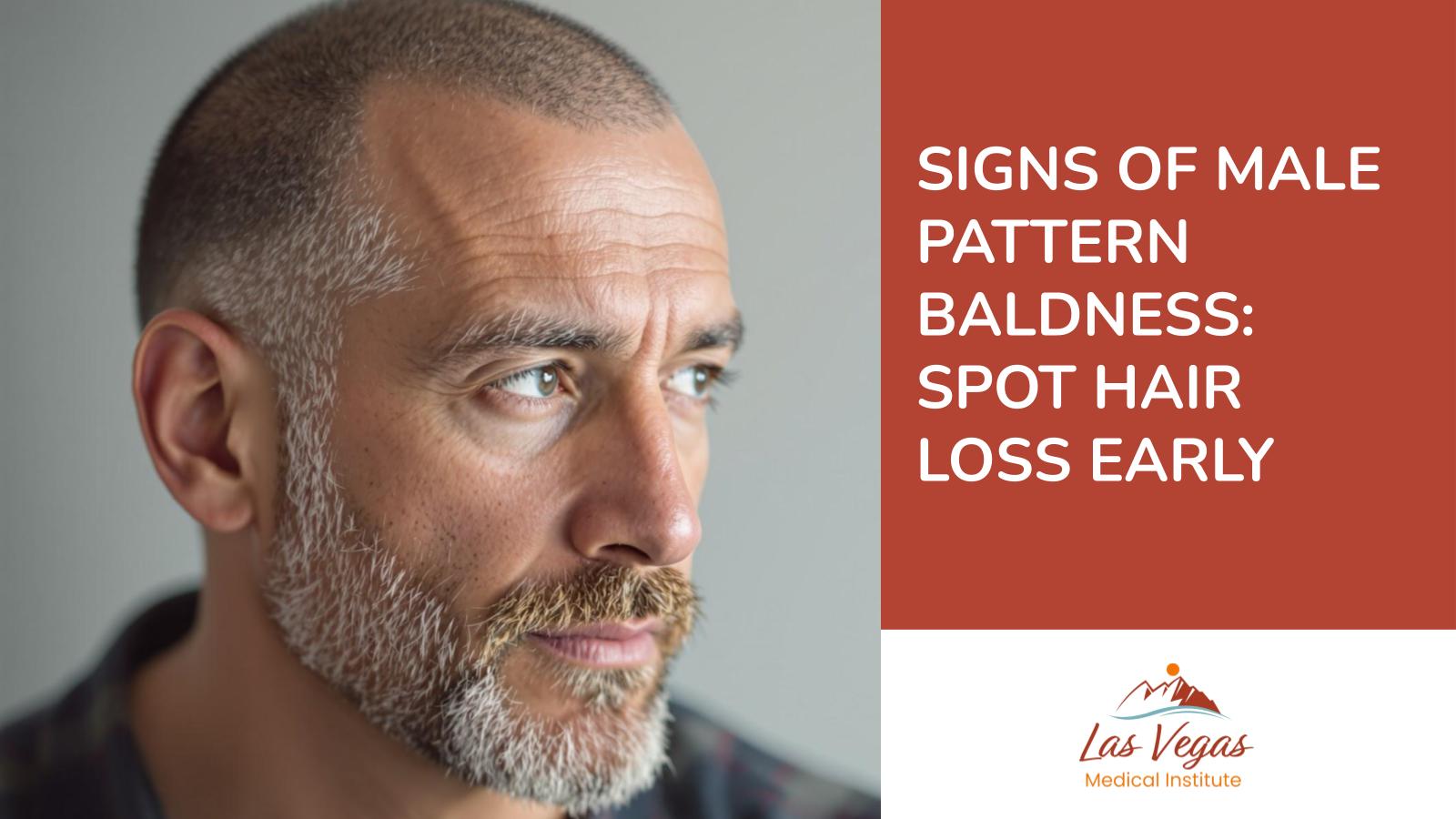
The clearest signs of male pattern baldness are a receding hairline, thinning hair on the crown, and gradual diffuse thinning across the scalp hair over time. These changes usually follow a predictable male pattern, rather than sudden clumps of hair loss or random bald patches, and they slowly progress through several recognizable stages. To catch hair loss early, a person should watch for a hairline that gradually moves backward, more hairs in the shower drain or on the pillow, and visible scalp where hair used to look dense.
Early detection matters because the sooner androgenetic alopecia is identified, the more options exist to slow further hair loss and potentially stimulate hair growth. Monitoring subtle hair thinning can reveal early signs that are easy to miss day to day. This helps distinguish completely normal daily hair shedding from actual hair loss that fits a male pattern.
Tracking photos in consistent lighting, watching for increased shedding, and noticing more visible scalp where hair once looked dense can help catch male pattern baldness early.
Understanding the Norwood stages and how a maturing hairline differs from progressive recession makes it easier to recognize true signs of male pattern baldness.
Male pattern baldness typically occurs without significant itching, pain, or redness, so these scalp symptoms may signal other conditions.
Early professional assessment by a hair-restoration specialist opens more options to slow hair loss, or preserve existing hair.
What Is Male Pattern Baldness?
Male pattern baldness, also called androgenetic alopecia, is a genetic type of hair loss where hair follicles become sensitive to male hormones, especially dihydrotestosterone (DHT).
How Androgenetic Alopecia Affects Hair Follicles
In androgenic alopecia, DHT gradually miniaturizes individual hairs. Each growth cycle produces finer, shorter hairs until the follicle stops making visible hair. This causes progressive thinning hair rather than sudden bald patches.
The process usually affects the frontal hairline and crown first because follicles there are more sensitive to hormonal changes. Follicles on the sides and back of the scalp are more resistant, which is why they often remain even with significant hair loss.
Family history strongly influences who develops pattern baldness and how early it starts. If close relatives experienced early hair loss or complete baldness, the chances of similar changes are higher. Environmental factors like stress or illness can speed things up but rarely cause the pattern alone.
Although male pattern baldness does not harm physical health, it can affect mental health. Some people experience anxiety, lower self-esteem, or depression as they notice more hair loss in the mirror or in photos.
Understanding that this type of hair loss is extremely common, and often completely normal for their genetics, can ease some stress. At the same time, knowing the condition is progressive helps people decide sooner about treatment options to prevent further hair loss.
How Male Pattern Baldness Typically Starts
Male pattern baldness usually starts slowly after puberty and advances over years. The first visible changes are often subtle and easy to dismiss at the beginning.
The First Areas Where Hair Thinning Appears
For many men, the earliest signs of male pattern baldness are around the temples and frontal hairline. The hairline recession may look like a mild V shape at first.
Over time, the hairline gradually moves backward, creating the classic M shape of pattern baldness. At the same time, hair on the crown may start to look thinner or show more scalp under bright light.
Some people notice early signs of balding as increased transparency of the hair rather than a clear bald spot. The scalp becomes easier to see when the hair is wet or styled back.
Common Age Ranges And Progression
Male pattern baldness can appear at almost any adult age, but patterns exist. Research suggests about a quarter of men show early hair loss before age 21.
By the mid-thirties, many notice more pronounced hair thinning or a visible bald spot, and by age 50, most men experience some degree of androgenic alopecia. But, the speed of progression varies widely.
Some individuals remain in early hair loss stages for many years with only mild hairline recession. Others progress more quickly toward partial or complete baldness, especially with a strong family history of advanced pattern baldness.
Early, Easy-To-Miss Signs Of Male Pattern Baldness
The first signs of male pattern baldness can blend into everyday life. People might blame lighting, hair styles, or stress and overlook the consistent pattern of change.
Visible Pattern Changes In Your Hairline
One key early sign is a subtle change in the shape of the hairline. Instead of a straight or gently rounded line, the corners near the temples creep backward.
In early stages, this shift may be only a few millimeters. Over time, these corners deepen, forming the characteristic M shape of male pattern hair loss. The central forehead area may keep more hair while the sides show clear recession.
For some, the hairline recession happens fairly symmetrically. For others, one side moves back faster, which can make styling harder and draw attention to the change.
Thinning At The Crown And Part Line
Another early clue is thinning hair at the crown. At first, this may look like a small bald spot that appears only under strong overhead lighting.
Friends or barbers might mention a thin area before the person sees it themselves, because the crown is hard to view directly without mirrors or photos.
Unlike circular bald patches from conditions like alopecia areata, this thinning usually spreads gradually. It affects a broader region and follows the typical male pattern rather than isolated spots.
Changes In Hair Texture, Density, And Shedding
People often experience hair thinning as a change in texture and density before clear bald areas form. Hair may feel softer, lighter, or less able to cover the scalp.
As hair follicles miniaturize, each strand becomes finer. Even if the number of follicles remains similar at first, the overall coverage looks weaker and reveals more scalp hair gaps.
Shedding patterns can also shift. It is completely normal losing hair like 50 to 100 hairs daily, but early signs of balding may include consistent increases beyond that range.
Clues include more hairs on the pillow, in the shower drain, or on the brush, plus a noticeable reduction in volume. But, excessive hair loss in big clumps may signal another type of hair loss instead.
How To Tell Male Pattern Baldness From Other Types Of Hair Loss
Recognizing the difference between androgenic alopecia and other types of hair loss is important, because treatments and expectations for regrowth can be very different.
Key Differences From Temporary Shedding And Patchy Hair Loss
Telogen effluvium is a common cause of sudden hair loss after stress, illness, hormonal changes, or weight gain. It causes diffuse thinning rather than a clear male pattern.
People with telogen effluvium notice hair falls out more than usual all over the scalp, sometimes in handfuls. The hairline and crown usually thin together without a distinct bald spot.
Alopecia areata, another condition, tends to create circular bald patches with sharp borders. Someone may find a smooth bald area without gradual miniaturization of surrounding hairs.
Male pattern baldness instead shows gradual, patterned thinning at the temples and crown. The process is slower, and there is no sudden complete bald patch in one small area.
Scalp Symptoms That Suggest Another Condition
Classic androgenetic alopecia usually occurs without severe itch, burning, or visible inflammation. The scalp looks normal aside from thinning hair and pattern changes.
If there is an itchy scalp, redness, scaling, or pain, another diagnosis may be more likely. Conditions like scalp psoriasis or fungal infections can cause hair loss and irritation.
Traction alopecia is another example. Tight hairstyles, braids, or frequent use of curling irons and similar tools can stress follicles and create permanent scarring in severe cases.
When these symptoms appear, or when hair loss affects the entire scalp quickly, a medical evaluation is important. A dermatologist may order blood tests or a scalp biopsy to clarify the type of hair loss.
Frequently Asked Questions About Signs of Male Pattern Baldness: Spot Hair Loss Early
What are the earliest signs of male pattern baldness to watch for?
The earliest signs of male pattern baldness typically include a slowly receding hairline at the temples, subtle thinning at the crown, and increased hair shedding. You may also notice more visible scalp and a change in hair density or texture over time.
How can I tell the difference between normal shedding and early signs of male pattern baldness?
Normal shedding is losing about 50–100 hairs a day without a clear pattern of thinning. Early male pattern baldness shows a consistent trend. The hairline creeps back, the crown looks thinner, and photos over months reveal gradual density loss in a typical male pattern rather than random shedding.
What is the Norwood scale and how does it relate to signs of male pattern baldness?
The Hamilton‑Norwood scale is a seven‑stage system doctors use to classify male pattern baldness. It starts with minimal temple recession and progresses to advanced loss on the top of the head. Tracking where your hairline and crown fit on this scale helps assess severity and monitor progression over time.
Can early male pattern baldness be slowed or reversed?
Early male pattern baldness can often be slowed and sometimes partially reversed with timely treatment. Options like topical minoxidil, prescription oral medications such as finasteride, low‑level laser therapy, and procedures like PRP or hair transplant may help. Results vary, so a dermatologist’s evaluation is important before starting any regimen.
Conclusion and Summary of Signs of Male Pattern Baldness: Spot Hair Loss Early
Recognizing the early signs of male pattern baldness allows individuals to act before significant hair loss develops. Subtle hairline changes, crown thinning, and increased shedding often appear long before a clear bald spot.
By understanding the Norwood stages, paying attention to texture and density changes, and distinguishing androgenetic alopecia from temporary shedding or patchy hair loss, people can better judge what they are experiencing.
When in doubt, especially with sudden hair loss, scalp symptoms, or rapid diffuse thinning, a professional evaluation is the safest step. Early guidance can help protect healthy hair, slow further hair loss, and explore options that may stimulate hair follicles and support long-term confidence.
Ready to Restore Your Hair with Non-Surgical Hair Restoration in Las Vegas?
Thicker Hair. Natural Regrowth. No Downtime.
Unlike hair transplants that require invasive surgery, scarring, and weeks of recovery, our advanced platelet-rich plasma PRP hair restoration uses your body's own healing platelets to naturally stimulate hair follicles and regrow your hair. It's like waking up dormant follicles and giving them the growth factors they need to thrive again.
This isn't hiding under toupees or settling for temporary hair replacement systems. Our medical-grade hair restoration without surgery delivers concentrated growth factors directly into your scalp, targeting the root cause of thinning and triggering natural regrowth where you need it most.
Are You Experiencing These Common Hair Loss Problems?
Receding hairline that keeps moving back.
Thinning crown that’s becoming more visible.
Bald spots that won’t fill in.
Male pattern baldness affecting your confidence.
Female pattern baldness that’s getting worse.
Patchy hair loss in multiple areas.
Frontal hairline thinning and recession.
Sudden hair loss that appeared out of nowhere.
Experience Benefits You Can Actually FEEL:
Natural hair regrowth without surgery or scars.
Thicker, fuller hair that’s actually yours.
No more hiding under toupees or wigs.
Effective non-surgical hair restoration for men and women.
Minimally invasive with no downtime.
Safe, natural solution using your own blood platelets.
Real hair replacement from your own follicles.
And much more!
Why settle for temporary cover-ups or invasive transplants when you can regrow your own hair naturally? PRP hair restoration is trusted by men and women worldwide who've experienced real regrowth in areas they thought were gone forever. Many patients see visible improvements within months, with continued thickening over time.
At Las Vegas Medical Institute, we blend advanced PRP hair restoration technology with physician-led expertise for hair restoration results that restores your hair, appearance, and your confidence.
Ready to regrow your hair naturally? Schedule Your Hair Restoration Consultation here, or call us today at (702) 577-3174 and discover how non-surgical hair restoration is helping men and women across Las Vegas reclaim their full, healthy hair!
Cover Photo Illustration by: By Las Vegas Medical Institute.
Ultherapy vs Morpheus8 comes down to lifting vs. remodeling: Ultherapy uses focused ultrasound energy to tighten sagging skin by targeting deeper layers for a non surgical facelift effect, while Morpheus8 uses microneedling and radiofrequency energy to improve skin texture, tone, and firmness through collagen and elastin production. For most patients, the "right" choice depends on…
Morpheus8 for the body is a minimally invasive, non surgical radiofrequency microneedling treatment. It tightens skin, improves texture, and can reduce small amounts of fat by delivering RF energy through tiny needles into the deeper layers. It works by creating controlled skin injury and heat at precise depths, which jump-starts the body's natural healing process…
Morpheus8 for the stomach before and after results typically show firmer abdominal skin, smoother texture, and a tighter look, because radiofrequency microneedling triggers new collagen and elastin where skin laxity and crepey skin tend to linger. It's a minimally invasive treatment designed to tighten loose skin and improve skin tone and skin texture, not a…
Morpheus8 reviews tend to land in the same place: patients like it most when they want firmer, smoother skin and are willing to do a properly planned series with a skilled provider. Morpheus8 is a microneedling plus radiofrequency energy procedure done in a medical office setting. It is designed to improve skin texture, pores, acne…