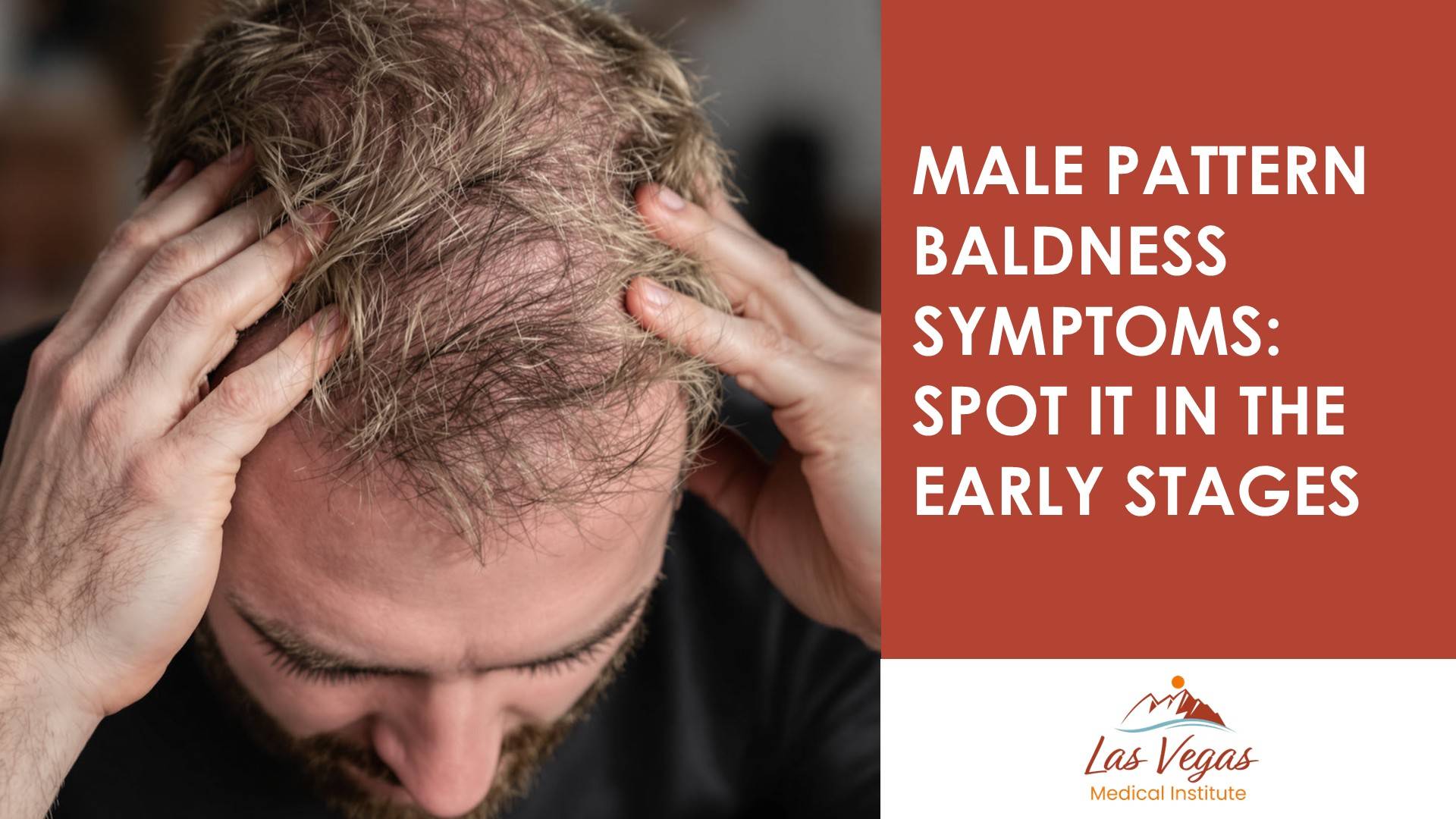
Male pattern baldness symptoms typically begin with a receding hairline or thinning at the crown, signaling the early stages of androgenetic alopecia. The most common pattern involves gradual hair loss at the temples and vertex, affecting more than half of men by age 50. Recognizing these early signs matters because starting treatment early can slow hair loss, preserve existing follicles, and improve long-term outcomes.
Hair often becomes finer, shorter, and less dense before noticeable bald patches appear. At this stage, non-surgical treatments such as topical or oral medications, PRP therapy, and lifestyle adjustments may help stabilize shedding and support healthier hair growth. If hair loss appears sudden, patchy, or accompanied by itching, redness, or scaling, it may point to a different condition. A professional evaluation can identify the cause and guide the most effective treatment plan before permanent loss occurs.
Key Takeaways of Male Pattern Baldness Symptoms
Male pattern baldness symptoms usually start with a receding hairline and thinning at the crown, gradually progressing in a predictable pattern.
Recognizing early signs such as finer, shorter hairs and increased scalp visibility helps in seeking timely intervention for male pattern baldness.
Male pattern baldness is typically painless and does not involve scalp symptoms like itching or redness, distinguishing it from other types of hair loss.
Consult a dermatologist if hair loss is sudden, patchy, or accompanied by scalp discomfort to ensure accurate diagnosis and access effective treatments.
Male Pattern Baldness Hair Loss
Male pattern baldness, officially known as androgenetic alopecia, is a common type of hair loss that impacts millions of men worldwide. This condition is genetically determined and directly influenced by male sex hormones (androgens), particularly dihydrotestosterone (DHT).
What Causes Male Pattern Baldness?
The root cause lies in the genetic sensitivity of scalp hair follicles to DHT. When androgens stimulate hair growth in other body areas, DHT actually triggers hair follicles in susceptible regions, like the temples and crown, to shrink over time. This process is called miniaturization: hair follicles become smaller, hair grows back finer and shorter, and gradually, hair density decreases. Eventually, these follicles produce only soft, thin hairs (vellus hairs), or stop generating hair entirely.
Who Is Affected?
Male pattern hair loss affects over half of all men by the age of 50, and incidence increases steadily with age. Having a family history of pattern baldness, on either side, greatly ups your risk. While women may experience a variant known as female pattern hair loss, the typical "M-shaped" recession and crown thinning are hallmarks unique to men.
Understanding this progression is key: hair loss occurs slowly, often starting after puberty and becoming progressively noticeable with time.
Early Signs and Progression of Symptoms
The first symptoms of male pattern baldness are deceptively subtle. Men often notice their hairline beginning to creep back at the temples, a classic receding hairline. This can appear as an "M" shape in the frontal hairline, where the sides move backward while the center stays stable longer.
Thinning Hair at the Crown
Another early symptom is thinning hair at the crown (also called the vertex). This thinning often starts as a small patch and enlarges over months or years. Some men may notice their scalp showing through more clearly, especially under bright light or after styling their hair.
Changes in Hair Quality and Density
Before areas become bald, many men observe that individual hairs become finer, shorter, and softer. The overall hair count drops, leading to thinning rather than complete hair loss at first. If left unchecked, these changes eventually produce clearly visible bald patches.
Absence of Scalp Symptoms
A distinctive sign is that male pattern baldness symptoms rarely include scalp discomfort. There's typically no itching, redness, soreness, or scaling. The process is painless, a stark difference from other types of hair loss like alopecia areata or scalp infections, which often have skin symptoms.
Gradual Progression
The entire process develops slowly, sometimes over decades, so the progression may not be obvious month to month. Regularly comparing old photos or monitoring hair thickness can help you spot changes, and seek treatment before more hair is lost.
Common Patterns of Hair Loss
Male pattern baldness doesn't look the same for everyone, but certain classic patterns help distinguish it from other forms of hair loss.
Typical Hair Loss Patterns
Most men first notice a receding hairline at the temples, often forming a well-defined "M" shape. Alongside this, thinning at the crown develops, sometimes alone, but frequently in combination with frontal recession. As these areas enlarge, they may eventually meet, leaving hair mostly on the sides and back of the head.
Norwood-Hamilton Staging System
Dermatologists use the Norwood-Hamilton classification to describe the different stages of male baldness:
Stage III-IV: Deepening recession and a clear bald spot emerges at the vertex.
Stage V-VII: Frontal and crown hair loss join, creating the classic “horseshoe” shape around the back and sides.
Recognizing these patterns is crucial, male pattern baldness is usually symmetrical and gradually progressive. Patchy or circular bald spots, or rapid diffuse thinning over the entire scalp, strongly suggest another type of hair disorder.
Male vs. Female Patterns
Unlike male pattern hair loss, female pattern baldness typically presents as diffuse thinning across the crown without a receding hairline. This fundamental difference helps doctors diagnose male pattern baldness correctly and recommend the most effective treatment options.
Differentiating Male Pattern Baldness from Other Types of Hair Loss
Not all hair loss is created equal. While male pattern baldness follows a gradual and predictable pattern, other causes may present with different symptoms, timelines, or scalp findings.
When Hair Loss Isn’t Male Pattern Baldness
Alopecia Areata: Characterized by round, smooth, patchy hair loss, not the slow, patterned thinning of androgenetic alopecia.
Telogen Effluvium: Causes rapid, diffuse hair shedding over the entire scalp, often triggered by illness, surgery, crash dieting, or new medications.
Scalp Disorders: Infections and inflammatory diseases (like tinea capitis or lupus) cause redness, scaling, tenderness, or even scarring, symptoms rarely seen in pattern baldness.
Key Symptoms to Watch For
Sudden, patchy, or complete loss of scalp or body hair suggests a diagnosis other than classic male pattern hair loss. Likewise, scalp pain, persistent itch, visible inflammation, or breakage of individual hairs are warning signs. Family history helps, but diagnostic clarity may require a specialist evaluation, sometimes including blood tests or scalp biopsy.
Why It Matters
Misdiagnosing hair loss can delay effective treatment and, in some cases, may signal underlying medical problems. Accurate diagnosis in a medical office is essential to rule out more serious hair disorders, and to identify which FDA approved treatments, like topical minoxidil or finasteride, will offer the best outcome.
When to See a Doctor
Knowing when to consult a dermatologist can make all the difference in managing male pattern baldness and protecting your hair health. Not every receding hairline means immediate intervention, but several red flags should prompt a medical visit.
Signs Requiring Immediate Medical Attention
Sudden, rapid, or patchy hair loss
Severe scalp symptoms: itching, redness, pain, or scaling
Diffuse thinning with no clear pattern
Associated systemic symptoms: fatigue, weight gain or loss, hormonal changes
Seeing a doctor is also advisable if hair loss begins unusually early, progresses rapidly, or if there's a family history of other hair disorders. Evaluating these cases with expert tools can help confirm androgenetic alopecia and rule out alternative diagnoses.
Exploring Hair Loss Treatment Options with a Specialist
For those seeking to treat male pattern baldness, a specialist can offer evidence-based guidance on FDA approved treatments, or advanced solutions such as hair transplant surgeries and platelet rich plasma injections. Professional diagnosis also ensures you're not dealing with scarring alopecia or another reversible condition. Early action usually means more hair is preserved and, in some cases, successful hair regrowth is possible.
Frequently Asked Questions About Male Pattern Baldness Symptoms: Spot It in The Early Stages
What are the earliest symptoms of male pattern baldness?
The earliest symptoms of male pattern baldness typically include a receding hairline, especially around the temples, and gradual thinning at the crown. Hair often becomes finer and less dense before actual bald patches develop. These symptoms progress slowly over time and are usually painless.
How can I tell if my hair loss is male pattern baldness or another condition?
Male pattern baldness presents as gradual, patterned hair loss at the temples and crown without scalp discomfort. If you notice sudden, patchy hair loss, or scalp symptoms like itching and redness, it may indicate a different condition. A specialist can provide an accurate diagnosis if you're unsure.
Does male pattern baldness affect confidence and mental health?
Yes, male pattern baldness can impact confidence and self-esteem. Many men report stress, anxiety, or social withdrawal due to visible hair thinning or bald patches. Support from professionals, friends, or support groups can be important while exploring treatment or coping strategies.
At what age does male pattern baldness usually begin?
Male pattern baldness can begin as early as the late teens or twenties, but it most commonly starts after puberty and becomes more noticeable with age. Over half of men experience some degree of pattern baldness by age 50, with risk increasing if there’s a family history.
What treatments are available for male pattern baldness symptoms?
Common treatments for male pattern baldness symptoms include topical minoxidil, oral finasteride, and platelet-rich plasma injections. Early diagnosis by experts help ensure the best outcome, as timely intervention can slow or sometimes reverse hair loss.
Can male pattern baldness be prevented or reversed?
While male pattern baldness is largely genetic and can’t always be prevented, certain treatments can slow its progression or regrow hair in some cases. Early use of FDA-approved therapies combined with healthy lifestyle choices, offers the best chance for positive results.
Conclusion and Summary of Male Pattern Baldness Symptoms: Spot It in The Early Stages
Male pattern baldness symptoms manifest as painless, gradual, and predictable thinning, primarily at the hairline and crown. Differentiating androgenetic alopecia from other types of hair loss, especially when symptoms are rapid, patchy, or accompanied by scalp changes, is critical. With accurate diagnosis and timely intervention, many men can slow further hair loss or explore treatment options to stimulate hair growth and restore confidence.
If you notice pattern hair loss or have questions about diagnosis and therapies, seeking expert advice offers the best path toward healthy hair. Don't wait for complete baldness, early action can make a lasting difference in your hair journey.
Ready to Restore Your Hair with Non-Surgical Hair Restoration in Las Vegas?
Thicker Hair. Natural Regrowth. No Downtime.
Unlike hair transplants that require invasive surgery, scarring, and weeks of recovery, our advanced platelet-rich plasma PRP hair restoration uses your body's own healing platelets to naturally stimulate hair follicles and regrow your hair. It's like waking up dormant follicles and giving them the growth factors they need to thrive again.
This isn't hiding under toupees or settling for temporary hair replacement systems. Our medical-grade hair restoration without surgery delivers concentrated growth factors directly into your scalp, targeting the root cause of thinning and triggering natural regrowth where you need it most.
Are You Experiencing These Common Hair Loss Problems?
Receding hairline that keeps moving back.
Thinning crown that’s becoming more visible.
Bald spots that won’t fill in.
Male pattern baldness affecting your confidence.
Female pattern baldness that’s getting worse.
Patchy hair loss in multiple areas.
Frontal hairline thinning and recession.
Sudden hair loss that appeared out of nowhere.
Experience Benefits You Can Actually FEEL:
Natural hair regrowth without surgery or scars.
Thicker, fuller hair that’s actually yours.
No more hiding under toupees or wigs.
Effective non-surgical hair restoration for men and women.
Minimally invasive with no downtime.
Safe, natural solution using your own blood platelets.
Real hair replacement from your own follicles.
And much more!
Why settle for temporary cover-ups or invasive transplants when you can regrow your own hair naturally? PRP hair restoration is trusted by men and women worldwide who've experienced real regrowth in areas they thought were gone forever. Many patients see visible improvements within months, with continued thickening over time.
At Las Vegas Medical Institute, we blend advanced PRP hair restoration technology with physician-led expertise for hair restoration results that restores your hair, appearance, and your confidence.
Ready to regrow your hair naturally? Schedule Your Hair Restoration Consultation here, or call us today at (702) 577-3174 and discover how non-surgical hair restoration is helping men and women across Las Vegas reclaim their full, healthy hair!
Cover Photo Illustration by: Las Vegas Medical Institute.
Is Morpheus8 worth it? For many patients with mild to moderate skin laxity, uneven skin texture, or acne scars, it can be, because Morpheus8 combines microneedling with radiofrequency energy to stimulate collagen production in deeper layers of the skin for tighter, smoother, more even-looking skin. The practical "worth it" test is simple: the best candidates…
Morpheus8 is a minimally invasive treatment that tightens skin, softens fine lines and wrinkles, and improves skin texture by combining microneedling with radiofrequency energy to stimulate collagen production in the deeper layers. In a medical office setting, it's commonly chosen for acne scars, sagging skin, uneven skin tone, and enlarged pores, especially when patients want…
Morpheus8 skin tightening is a minimally invasive RF microneedling treatment that delivers radiofrequency energy into deeper layers of the skin to stimulate collagen production, improve skin texture, and create a firmer, tighter look over time. In practical terms, most patients can expect a numbed, in-office procedure, mild redness or swelling afterward, and visible results that…
Las Vegas Medical Institute earns top honors in the 2026 Best of Beauty awards, solidifying its reputation as a premier destination for regenerative medicine in Las Vegas.Las Vegas Medical Institute (LVMI) has been named "Best Regenerative Medicine" by Modern Luxury Vegas Magazine as part of its highly anticipated 2026 Best of Beauty awards. The distinction…